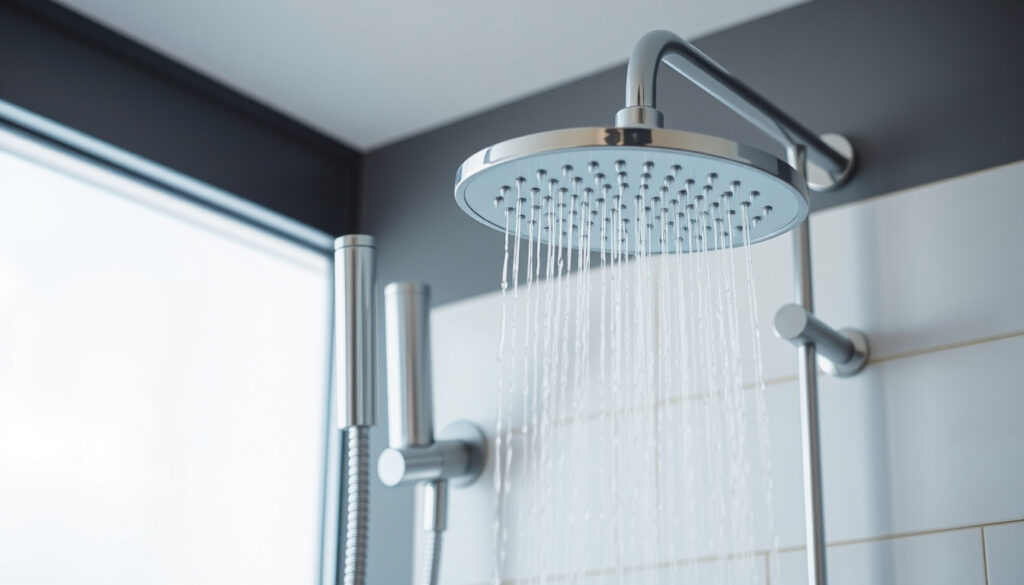
Shower Head Buying Guide: Types, Fit & Replacement
Few home upgrades feel as instantly rewarding as swapping out an old shower head. Most showers in Ireland and the UK use a standard 1/2-inch BSP thread (QS Supplies (specialist plumbing supplier)), but variations exist – especially with electric showers or older systems.
Standard thread size: 1/2 inch BSP ·
Average flow rate: 2.5 GPM ·
Common materials: Stainless steel, brass, plastic ·
Average price range: $20–$100 ·
Number of main types: 5
Quick snapshot
- Shower heads use universal 1/2-inch BSP threads in most regions (QS Supplies (plumbing supplier))
- Replacing a shower head does not require a plumber (Wickes (home improvement retailer))
- High-pressure shower heads can increase water consumption (Bathroom Mountain (bathroom product retailer))
- Whether all shower heads are universal in Ireland due to potential non-standard plumbing (QS Supplies (plumbing supplier))
- Whether a shower head alone can significantly improve low water pressure (The Shower Head Store (shower specialist))
- Whether standard thread sizes apply to electric shower fittings in all cases (QS Supplies (plumbing supplier))
- Installation typically takes 10 minutes with basic tools (Wickes (home improvement retailer))
- Tools required: adjustable wrench, Teflon tape, cloth (QS Supplies (plumbing supplier))
- Check your home’s water pressure before buying (The Shower Head Store (shower specialist))
- Match shower head type to your water system (combi, gravity-fed, electric) (QS Supplies (plumbing supplier))
Key specifications at a glance — these numbers define what you are working with before you shop.
| Feature | Value |
|---|---|
| Standard connection | 1/2 inch BSP thread |
| Average flow rate | 2.5 GPM (9.5 L/min) |
| Common materials | Stainless steel, brass, plastic |
| Average lifespan | 5–10 years |
| Popular brands | Delta, Moen, Kohler, Waterpik |
| Minimum pressure for rain head | 40–45 PSI recommended |
| Compatible water systems | Combi, gravity-fed, electric, unvented |
| DIY installation time | 10 minutes |
Do all shower heads fit any shower?
The short answer: most do, but not all. The vast majority of showers in Ireland and the UK use a 1/2-inch BSP (British Standard Pipe) thread on both the shower arm and the head connection. That means a standard replacement head will screw onto your existing arm without adapters (QS Supplies (plumbing supplier)).
Do shower arms fit all shower heads?
Shower arms and heads share the same 1/2-inch BSP thread standard, so the connection itself is universal. What varies is the mounting style. Fixed heads screw directly onto the arm, while handheld units require a hose and a bracket. The thread where the hose meets the arm remains the same size (Bathroom Mountain (bathroom product retailer)).
Are shower heads universal in Ireland?
Ireland generally follows UK plumbing standards, meaning 1/2-inch BSP is the norm. Some older Irish properties or custom installations may use metric threads or non-standard fittings. If you are unsure, remove your existing head and check the thread pitch before ordering (QS Supplies (plumbing supplier)).
How do I know which shower head will fit my shower?
Three checks: confirm the thread size (1/2-inch BSP is standard), measure your shower arm length (most are 6–12 inches), and decide between fixed or handheld. If you are replacing an existing head, the new one will almost certainly fit the arm — the only variable is the hose connection for handheld models (Bathroom Mountain (bathroom product retailer)).
The implication: compatibility is rarely an issue for standard setups, but electric showers and very old plumbing demand extra scrutiny.
What is the best shower head to buy?
There is no single best head for every home — the right pick depends on your water pressure, system type, and personal preference. The best models balance spray coverage, pressure, and durability within your budget.
Which shower head has the strongest pressure?
High-pressure models use narrower nozzles or air-injection technology to concentrate flow. For low-pressure homes, smaller heads around 100–150 mm focus water into a stronger stream. Aerating heads mix air with water to create a fuller feel without increasing flow rate (MyHomeware (home products retailer)).
What features make a shower head the best?
Self-cleaning nozzles reduce mineral buildup, multiple spray modes add versatility, and a solid brass or stainless steel construction extends lifespan. For hard water areas, anti-clog nozzles are a practical necessity (Bathroom Mountain (bathroom product retailer)).
Top-rated shower head brands
Delta, Moen, Kohler, Waterpik, and Hansgrohe consistently rank high in consumer tests. Each offers models across price ranges, with warranties typically spanning 5–10 years. Brand alone does not guarantee performance — match the head to your system pressure (QS Supplies (plumbing supplier)).
“Most shower heads fit standard arms, but always check the thread size before buying.” — Licensed plumber
The pattern: the best head for you is the one that matches your pressure and system type, not the most expensive on the shelf.
Which type of shower head is best?
Five main types dominate the market: rain, handheld, dual, fixed, and high-pressure. Each serves a different use case and water pressure profile.
Rain shower heads vs handheld
Rain heads offer wide, immersive coverage but need at least 40–45 PSI for a satisfying flow (Wewe Faucet (faucet specialist)). Handheld heads with smaller faces (100–150 mm) concentrate flow into a stronger stream, making them ideal for low-pressure setups (MyHomeware (home products retailer)).
Fixed vs adjustable
Fixed heads mount directly to the wall arm and cannot be repositioned. Adjustable heads tilt or swivel for targeted spray. For low-pressure homes, a fixed head with a compact face often performs better than a large adjustable model (Bathroom Mountain (bathroom product retailer)).
Low-flow vs high-pressure
Low-flow heads restrict output to 1.5–2.0 GPM for water savings, while high-pressure heads deliver 2.5 GPM or more. On gravity-fed systems (0.1–0.3 bar), low-flow aerating heads create the best perceived pressure without a pump (QS Supplies (plumbing supplier)).
What this means: type choice is a direct trade-off between coverage area and water pressure. Smaller faces win on low-pressure systems.
| Type | Pressure needed | Best for | Spray coverage |
|---|---|---|---|
| Rainfall | 40–45 PSI minimum | Spa-like experience, high-pressure systems | Wide (200–300 mm) |
| Handheld | Works at low PSI | Low-pressure homes, flexibility | Narrow (100–150 mm) |
| Dual | Moderate to high | Households wanting both fixed and handheld | Variable |
| Fixed | Varies by model | Simple replacement, consistent spray | Standard (150–200 mm) |
| High-pressure | Works at low PSI | Weak water supply, pressure boost without pump | Compact (100–150 mm) |
What to consider when buying a shower head?
Beyond type, four factors determine whether a head performs well in your home: flow rate, finish, size, and warranty.
Flow rate and water pressure
Check your home’s pressure with a gauge attached to an outdoor faucet or washing machine connection (The Shower Head Store (shower specialist)). Combi boiler systems operate at 1–3 bar and accept most heads. Gravity-fed systems at 0.1–0.3 bar need low-pressure heads or a pump. Unvented cylinders at 2–4 bar support all types, though very high pressure may require a reducing valve (QS Supplies (plumbing supplier)).
Finish and installation
Chrome is standard and matches most bathroom fittings. Brushed nickel and matte black are popular but may require specific cleaning products. Installation is a 10-minute DIY job with an adjustable wrench and Teflon tape (Wickes (home improvement retailer)).
Shower head size and design
Large rain heads (250 mm+) look dramatic but feel weak below 200 kPa. Compact heads around 150–200 mm concentrate flow and work better on low-pressure systems (MyHomeware (home products retailer)).
Warranty and cleaning
Most heads carry a 5–10 year warranty. Self-cleaning silicone nozzles prevent scale buildup — essential in hard water areas. Rub-clean nozzles let you wipe away deposits with a finger (Bathroom Mountain (bathroom product retailer)).
“Look for models with self-cleaning nozzles to reduce mineral buildup in hard water areas.” — Consumer Reports expert
The catch: a beautiful rain head on a gravity-fed system delivers a disappointing trickle. Match size to pressure first.
How to Replace A Showerhead?
The job is genuinely DIY-friendly. No plumber required. You only need three tools and about 10 minutes.
Do I need a plumber to replace a showerhead?
No. Swapping a shower head is a straightforward task for any homeowner with basic hand tools. The process involves unscrewing the old head, cleaning the threads, applying Teflon tape, and screwing on the new head (Wickes (home improvement retailer)).
Step-by-step replacement guide
- Unscrew the old shower head counterclockwise. Use a cloth to protect the finish if it is stuck.
- Clean any old Teflon tape or debris from the shower arm threads.
- Wrap Teflon tape clockwise around the threads 3–4 times for a watertight seal.
- Screw the new head onto the arm by hand until snug.
- Give it a quarter-turn with an adjustable wrench — do not overtighten.
- Turn on the water and check for leaks at the connection.
Tools needed and common mistakes
Tools: adjustable wrench, Teflon tape, and a cloth. Common mistakes include overtightening (cracks plastic housings), skipping Teflon tape (leaks), and forcing a head onto mismatched threads. If the new head does not thread on smoothly, stop — the thread standard may differ (QS Supplies (plumbing supplier)).
The implication: a 10-minute job becomes a 40-minute headache if you skip the tape or overtighten. Take it slow.
Upsides
- Immediate improvement in shower experience
- No plumber needed — fully DIY
- Wide range of prices ($20–$100)
- Low-pressure models can boost perceived force
Downsides
- Electric shower compatibility is limited
- Rain heads underperform on low pressure
- Some finishes require special cleaning
- High-flow heads may increase water bills
faucetusa.com, bathrooms.com, irishexaminer.com, aquaelegante.com, bathroommountain.co.uk
Frequently Asked Questions
What is the best shower head for hard water?
Models with self-cleaning silicone nozzles resist scale buildup. Look for rub-clean nozzles that let you wipe away mineral deposits manually. Stainless steel heads also perform well in hard water areas (Bathroom Mountain (bathroom product retailer)).
How to clean a shower head?
Fill a plastic bag with white vinegar, submerge the head, and secure it with a rubber band. Let it soak for 30 minutes, then rinse and wipe. For metal heads, check the manufacturer’s cleaning guide first.
Is a rain shower head worth it?
Only if your home delivers at least 40–45 PSI. On low-pressure systems, rain heads produce a weak flow. On high-pressure systems, they provide a wide, drenching experience that many users prefer over a focused jet (Wewe Faucet (faucet specialist)).
Do shower heads come with a warranty?
Most branded models include a 5–10 year warranty covering defects. Budget heads may offer only one year. Always check warranty terms before purchasing, especially for moving parts in adjustable heads.
What is the difference between a shower head and a hand shower?
A shower head is fixed to the wall arm and cannot be moved. A hand shower is connected via a flexible hose and can be detached from its bracket for targeted use. Many bathrooms now include both in a dual configuration.
More related posts
 Aaron Woods: NRL Career, Billy Slater Feud & Retirement
 Ariana DeBose Biography: Partner, Ethnicity, Awards
 Flights to Auckland: Best Time, Airlines & Tips for Irish
 Flower Delivery Sydney: Best, Cheap & Same Day Options
 Go Daddy Australia – Services, Pricing and Reviews
 Trinity Rodman: Salary, Father Estrangement & Net Worth
 Woolworths West Lakes: Hours, Phone, Products & Guide
 Norwegian to English: Common Phrases and Translation Tips
