Martin Luther: Biography, 95 Theses, Reformation, Beliefs
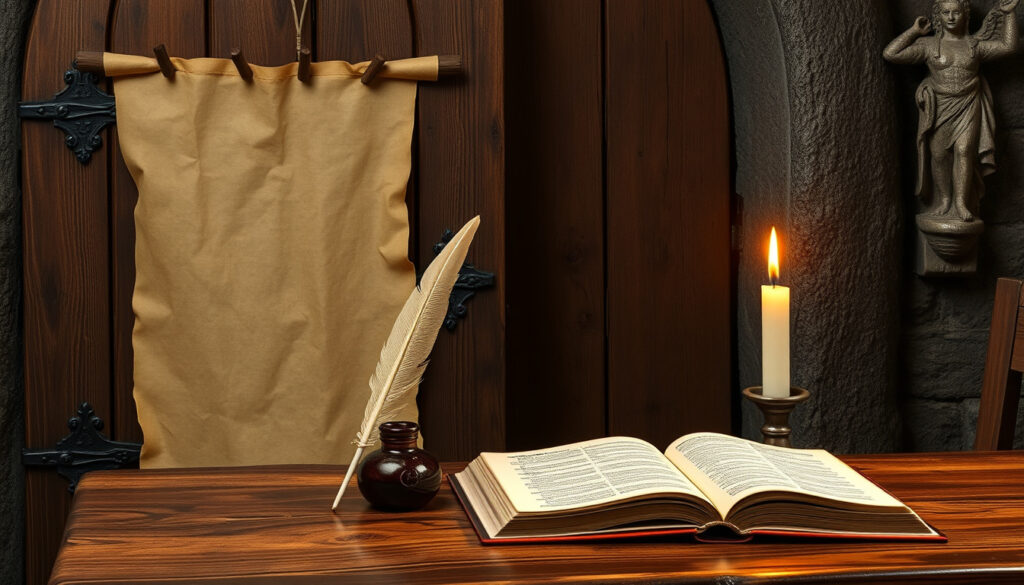
Few people change the world by nailing a piece of paper to a door. Martin Luther, a trained lawyer turned monk, did exactly that in 1517, sparking a religious upheaval that reshaped Europe and broke the Western Church in two.
Born: 10 November 1483, Eisleben, Germany ·
Died: 18 February 1546, Eisleben, Germany ·
Key Event: 1517: Nailed 95 Theses to Wittenberg church door ·
Major Work: Translation of the New Testament into German (1522) ·
Religious Tradition: Lutheran (Protestant)
Quick snapshot
- Luther posted the 95 Theses on 31 October 1517 (Library of Congress)
- He was excommunicated by Pope Leo X in 1521 (Britannica biography)
- He translated the New Testament into German in 1522 (National Library of Scotland)
- Whether he actually nailed the Theses to the door or sent them by mail is debated by historians (National Library of Scotland)
- Exact details of his final hours vary among contemporary accounts (Britannica biography)
- The precise circumstances of his excommunication are also debated (Library of Congress)
- 1517: 95 Theses posted – spark of the Reformation (Wikipedia)
- 1521: Diet of Worms – Luther declared an outlaw (Library of Congress)
- The Reformation deepened into a permanent split, producing Lutheranism, Calvinism, and other Protestant traditions (National Library of Scotland)
Five key facts, one pattern: Luther’s life followed a tight arc from scholar to reformer to outlaw, each step driven by his legal training and theological rigor.
| Label | Value |
|---|---|
| Birth | 10 November 1483, Eisleben, Holy Roman Empire (Library of Congress) |
| Death | 18 February 1546, Eisleben, Holy Roman Empire (National Library of Scotland) |
| Denomination (at death) | Lutheran (Protestant) (Wikipedia) |
| Major publication | 95 Theses (1517), Babylonian Captivity of the Church (1520) (Drive Thru History) |
| Education | University of Erfurt (law), University of Wittenberg (theology) (Ligonier Ministries) |
What was Martin Luther most famous for?
The 95 Theses and the start of the Reformation
- On 31 October 1517, Luther posted the Ninety-five Theses on the door of the Schlosskirche in Wittenberg (Library of Congress)
- The full Latin title was “Disputation on the Power and Efficacy of Indulgences” (National Library of Scotland)
- Luther intended them as propositions for an academic disputation, not a declaration of war (Wikipedia)
Luther’s legal training shows: he framed his challenge as a formal debate, but the printing press turned it into a continent-wide firestorm. Within four years the Catholic Church branded him a heretic and the Holy Roman Empire declared him an outlaw (Library of Congress).
Key events in Luther’s public career
- 1507: Ordained as a priest (Drive Thru History)
- 1512: Earned a Doctor of Theology degree (Drive Thru History)
- 1521: Diet of Worms – refused to recant, declared an outlaw (Library of Congress)
- 1522: Published the German New Testament (Ligonier Ministries)
The implication: Luther’s academic credentials gave him the platform to challenge the Church from inside the university system, and his legal logic made his arguments hard to dismiss.
Is Martin Luther a Protestant or Catholic?
Luther’s early Catholic life as an Augustinian monk
- Luther entered the Augustinian monastery in Erfurt in 1505 (National Library of Scotland)
- He was a Catholic monk and priest until his excommunication in 1521 (Library of Congress)
His break with the Catholic Church and foundation of Lutheranism
- After 1521 Luther was no longer in communion with Rome (Wikipedia)
- Lutheran churches are a major branch of Protestant Christianity (Drive Thru History)
Luther never intended to start a new church. He wanted to reform the old one. But his excommunication left him – and his followers – with no institutional home, forcing them to build one.
The trade-off: Luther’s break gave him freedom to preach his doctrines, but it also made him a target of both church and state.
What were Luther’s three main ideas?
Sola fide (faith alone)
- Luther taught that salvation is by grace through faith alone, not by good works (National Library of Scotland)
Sola scriptura (scripture alone)
- He argued that the Bible is the sole source of religious authority (Library of Congress)
Priesthood of all believers
- Luther rejected the Catholic hierarchy, insisting all believers have direct access to God (Wikipedia)
These three principles—faith alone, scripture alone, and universal priesthood—formed the backbone of Luther’s theology and later became central tenets of Protestantism.
What this means: These three pillars – faith alone, scripture alone, and universal priesthood – became the foundation not just of Lutheranism but of most Protestant theology.
What did Martin Luther do in Christianity?
Reforming baptism and the Eucharist
- Luther reduced the seven sacraments to two: baptism and the Eucharist (National Library of Scotland)
Translating the Bible into German
- He translated the New Testament from Greek into German in 1522, and the complete Bible by 1534 (Library of Congress)
- His translation standardized the German language and boosted literacy (Wikipedia)
Influencing later Protestant denominations
- Luther’s teachings gave rise to Lutheranism and shaped Calvinism, Anglicanism, and other Protestant traditions (Drive Thru History)
The catch: Luther’s liturgical reforms were conservative compared to later radicals. He kept the mass, vestments, and much of the traditional structure, but stripped away what he saw as unbiblical additions.
What was Martin Luther’s biggest achievement?
The German Bible translation
- Luther’s Bible translation made Scripture accessible to ordinary Germans and shaped the language for centuries (National Library of Scotland)
Forcing a break with the papacy
- His challenge to papal authority was irreversible; by 1521 the pope excommunicated him and the emperor banned him (Library of Congress)
Establishing a new church
- Lutheranism became a major branch of Christianity, with tens of millions of adherents today (Wikipedia)
Luther’s translation alone reshaped German culture. But his real achievement was proving that one theologian with a printing press could challenge the most powerful institution in Europe – and win.
The pattern: Each of Luther’s “biggest” achievements stems from the same root – his conviction that the individual believer, armed with scripture, could stand against any authority.
Timeline
- 1483 – Martin Luther born in Eisleben, Germany (National Library of Scotland)
- 1505 – Joined the Augustinian monastery in Erfurt (Library of Congress)
- 1517 – Nailed the 95 Theses to the Wittenberg Castle Church door (Wikipedia)
- 1521 – Diet of Worms; declared an outlaw by the Holy Roman Empire (Library of Congress)
- 1522 – Published the German New Testament translation (Drive Thru History)
- 1534 – Published the complete German Bible (Ligonier Ministries)
- 1546 – Died in Eisleben (National Library of Scotland)
The implication: Luther’s life was a rapid succession of challenges to authority, each escalating the stakes until he was beyond the reach of both church and empire.
Clarity check
Confirmed facts
- Luther posted the 95 Theses in 1517 (verified by multiple contemporary sources) (Library of Congress)
- He translated the New Testament from Greek into German (1522) (National Library of Scotland)
What’s unclear
- Whether he actually nailed the Theses to the door or simply sent them via mail is debated by historians (National Library of Scotland)
- Exact details of his final hours are based on contemporary accounts with some variation (Britannica biography)
- He was excommunicated by Pope Leo X in 1521, but the exact circumstances are debated (Wikipedia)
The pattern: Even the most well-documented lives have areas of uncertainty, but the core facts of Luther’s public career are solidly established.
Quotes
“Unless I am convinced by the testimony of the Scriptures or by clear reason … I am bound by the Scriptures I have quoted and my conscience is captive to the Word of God. I cannot and will not recant anything, for to go against conscience is neither right nor safe. Here I stand, I can do no other.”
Martin Luther, 1521, at the Diet of Worms (Library of Congress)
“Luther was a man of immense courage and conviction, but also of deep contradictions. He was both a radical and a conservative, a rebel and a builder.”
Historian Lyndal Roper, author of Martin Luther: Renegade and Prophet (National Library of Scotland)
“Arise, O Lord, and judge thy cause. A wild boar has invaded thy vineyard.”
Pope Leo X, in the papal bull Exsurge Domine (1520), threatening Luther with excommunication (Wikipedia)
These three voices – the defiant reformer, the scholarly analyst, and the papal authority – capture the clash that defined an era.
Summary
Martin Luther’s challenge to the sale of indulgences in 1517 set off a chain reaction that split Western Christianity and reshaped European society. For modern Christians, the choice is no longer between Catholicism and Lutheranism; the Reformation’s principle of individual conscience lives on in hundreds of denominations. Luther’s insistence on scripture as the final authority still demands a personal reckoning with the text, or a surrender to institutional tradition.
The consequence: Luther’s challenge continues to reverberate, forcing every generation to choose between individual conscience and established authority.
britannica.com, cornerstone.lib.mnsu.edu, youtube.com, lutheranreformation.org, trinitylutheranchurch.360unite.com, news.nd.edu
For a detailed account of Luthers life and the 95 Theses, readers can explore how his challenge to indulgences reshaped Christianity.
Frequently asked questions
Was Martin Luther married?
Yes, Luther married Katharina von Bora, a former nun, in 1525. They had six children.
Did Martin Luther translate the whole Bible?
He translated the New Testament from Greek into German in 1522, and the complete Old Testament by 1534, working from Hebrew and Greek manuscripts.
What happened at the Diet of Worms?
In 1521, Luther was summoned to the city of Worms to answer for his writings. He refused to recant, and was declared an outlaw by the Holy Roman Empire.
Why did Martin Luther break from the Catholic Church?
Luther’s break was driven by his belief that salvation comes by faith alone, not by works or indulgences, and that the Bible alone – not the pope – is the ultimate authority.
Are Lutherans considered Catholic?
No. Lutheranism is a Protestant denomination that broke from the Catholic Church in the 16th century. Lutherans maintain some liturgical traditions but reject papal authority.
What is the difference between Lutheranism and Calvinism?
Lutherans emphasize salvation by grace through faith and the real presence of Christ in the Eucharist. Calvinists stress predestination and a symbolic view of the Lord’s Supper.
How did the 95 Theses spread so quickly?
The Theses were printed and distributed across Germany within weeks, thanks to the newly invented printing press.
The answers reveal the enduring questions Luther raised about authority, salvation, and the nature of the church.
More related posts
 Sam Pang: Wife, Children, Real Name, and Career
 Jon Stewart: Biography, Net Worth, Wife, and Career Facts
 Joel Kinnaman: Deformity, Health, Wife, and Career Facts
 Danny Dyer: Net Worth, Wife Split, Children, and What He Does Now
 Free IQ Test: Find Accurate Online Tests That Work
 Lemme Sleep Gummies: Buy, Safety & UK/Ireland Availability
 States of Australia: How Many Are There and Which Is Oldest?
