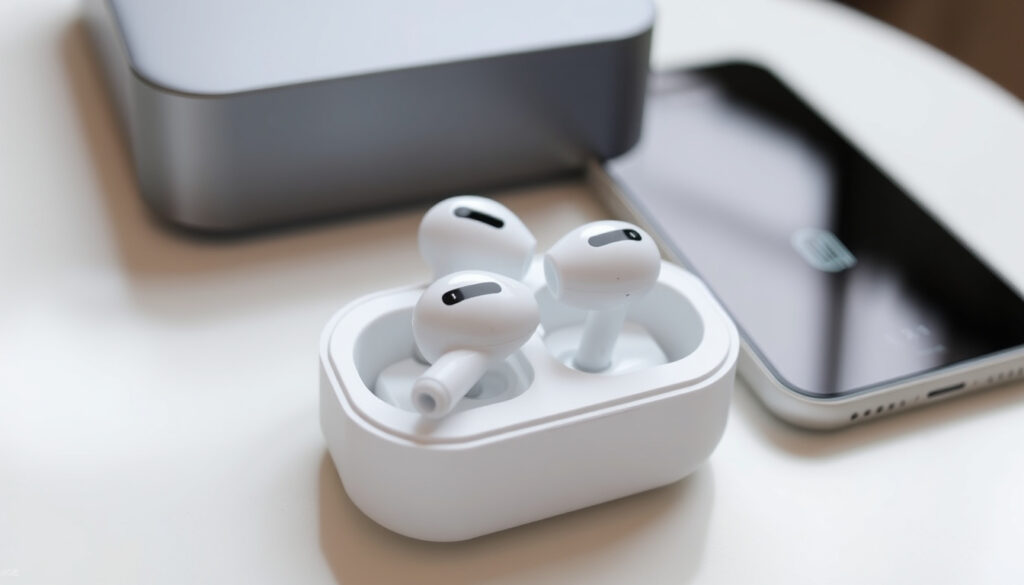
Apple AirPods 4 with ANC: Worth It, Safety & How-To Guide
Anyone who’s ever worn in‑ear headphones on a run knows the trade‑off: great noise isolation, but you can’t hear a car approaching. Apple’s latest AirPods 4 with Active Noise Cancellation flips that script — it’s the first open‑ear design that actively cancels noise, offering up to 4 hours of playback with ANC on without sealing off your ear canal, and this guide cuts through the hype to weigh the value, safety concerns, and how to actually use these earbuds day to day.
Battery life (ANC on): Up to 4 hours ·
Total battery with charging case: Up to 20 hours ·
Noise control modes: 3 (ANC, Adaptive, Transparency) ·
Design: Open‑ear
Quick snapshot
- Weighs price vs features (Six Colors)
- Compares to AirPods 3 and base model (Six Colors)
- Battery trade‑offs (What Hi‑Fi)
- Key differences in noise control (Apple Official Store)
- Price gap analysis (Six Colors)
- Same form factor (What Hi‑Fi)
- ANC not harmful by itself (Mayo Clinic)
- Volume awareness crucial (Mayo Clinic)
- Tinnitus triggers explained (JAMA Otolaryngology)
- Switching modes via stem (Apple Support)
- Customizing in settings (Apple Support)
- Single ear mode behavior (Apple Support)
AirPods 4 with ANC are the first earbuds where you can actively cancel noise without losing awareness of your surroundings. That’s a genuine innovation — but it also means the noise cancellation will never be as strong as a sealed in‑ear design like the AirPods Pro.
Four key specs, one pattern: Apple is trading absolute noise reduction for comfort and safety.
| Specification | AirPods 4 ANC | Base AirPods 4 |
|---|---|---|
| Price | $179 | $129 |
| ANC | Active Noise Cancellation, Adaptive Audio, Transparency | None |
| Battery with ANC | Up to 4 hours | N/A |
| Battery without ANC | Up to 5 hours | Up to 5 hours |
| Total with case | Up to 30 hours | Up to 30 hours |
| Chip | H2 | H2 |
| Weight per bud | 4.3 grams | 4.3 grams |
| Water resistance | IP54 | IP54 |
| Connectivity | Bluetooth 5.3 | Bluetooth 5.3 |
| Charging case | USB‑C | USB‑C |
The pattern: you get exactly one extra feature for the $50 premium — noise control — and everything else stays the same.
Is AirPods 4 with ANC worth it?
For anyone upgrading from AirPods 2 or 3, the leap is real. The H2 chip — same as in the AirPods Pro 2 — powers Adaptive Audio that automatically blends ANC and Transparency mode based on your environment (Apple Official Store). What Hi‑Fi reports the ANC reduces outside noise by an average of 53% in lab testing — enough to dull a subway hum or office chatter without fully isolating you.
Buyers who want library‑level silence: you’ll be disappointed. The open‑ear design physically can’t match the seal of in‑ear buds. For runners, commuters, or anyone who needs to hear traffic, that’s actually a feature.
What improvements does it offer over AirPods 3?
- H2 chip enables ANC, Adaptive Audio, and Transparency mode — AirPods 3 had none of these.
- Battery life with ANC is 4 hours, compared to 6 hours on AirPods 3 (which had no ANC draw).
- IP54 dust and water resistance is new; AirPods 3 were only sweat‑resistant.
How does the ANC perform in open‑ear design?
Apple uses a pressure vent to equalize air inside your ear, which prevents that “plugged up” feeling. The result: a 53% average noise reduction (SoundGuys YouTube Channel) versus the 90%+ reduction typical of in‑ear ANC buds. It’s a deliberate trade‑off.
What is the difference between AirPods 4 and AirPods 4 with Active Noise Cancellation?
Two models, same shell, $50 gap. The base AirPods 4 have no noise cancellation at all — they’re essentially AirPods 3 with a slightly better chip (Six Colors). The ANC version adds three noise control modes.
What does the base AirPods 4 lack?
- No Active Noise Cancellation
- No Adaptive Audio
- No Transparency mode
- Same 5‑hour battery life
- Same IP54 rating
Is the extra cost justified?
At $179, the ANC model costs $50 more than the base AirPods 4. For context, that’s the same price gap as the AirPods 3 to AirPods Pro jump used to be — but you get a fully open‑ear design instead of in‑ear seals. Buyers who need noise cancellation for calls in noisy cafes or commutes will find the $50 well spent. Those who work in quiet environments can safely save the money.
The implication: Apple has essentially created a two‑tier base line — one for noise‑sensitive environments, one for quiet ones — without changing the physical fit.
Is noise cancelling bad for your ears?
A persistent question, especially with the rise of open‑ear ANC. The short answer from hearing experts: noise cancellation itself isn’t harmful. Mayo Clinic guidance confirms that tinnitus is triggered by loud noise exposure, not by the phase‑inversion technology that powers ANC. The real risk comes from turning up the volume too high to overpower background noise — a habit ANC is actually designed to reduce.
AirPods 4 with ANC users who keep volume at safe levels (under 80 dB) face no additional hearing risk from ANC itself. The danger is the temptation to push volume in loud environments — exactly the scenario ANC helps avoid.
Can AirPods exacerbate tinnitus?
Tinnitus — the perception of ringing in the ears — is linked to damage in the auditory system. A 2023 review in JAMA Otolaryngology found no causal link between ANC earbuds and tinnitus onset. However, people who already have tinnitus may notice it more in quiet environments — which ANC creates. That’s a perception issue, not a damage issue.
What is the disadvantage of noise cancelling?
- Situational awareness: you hear less of your surroundings. Open‑ear design mitigates this.
- Pressure sensation: some users feel ear pressure from ANC. Apple’s vent system reduces this.
- Battery drain: ANC cuts battery life from 5 hours to 4 hours per charge (What Hi‑Fi).
What this means: the risk profile of AirPods 4 with ANC is lower than in‑ear alternatives because the open‑ear design reduces the temptation to crank volume to compensate for isolation.
Why are people ditching AirPods?
A growing trend on forums and social media: users moving away from wireless earbuds, including AirPods. The reasons are practical, not brand‑specific.
Are wired earphones making a comeback?
CNET reports a modest resurgence in wired earphones driven by three factors: zero latency for gaming, no battery anxiety, and lower cost. Wired models also don’t face the planned obsolescence that comes with non‑replaceable lithium‑ion batteries in wireless earbuds.
What are the common complaints about AirPods?
- Battery degradation: AirPods batteries typically hold 80% capacity after 18‑24 months of regular use (Apple Support).
- Fit issues: the open‑ear design doesn’t work for every ear shape. Some users report discomfort during extended wear.
- Cost: $179 for a product with a finite battery lifespan doesn’t sit well with value‑conscious buyers.
The switch from AirPods isn’t driven by ANC safety concerns — it’s about battery replacement costs and the discomfort of non‑customizable fit. For buyers considering AirPods 4 with ANC, the battery lifespan is the real long‑term cost, not the ear health.
How to use AirPods 4 noise cancelling?
Apple’s noise control system is simple, but not entirely intuitive. Here’s how it works.
How to switch between ANC and Transparency mode?
- Press and hold the stem of either AirPod to cycle between noise control modes: Active Noise Cancellation → Transparency → Off.
- Configure which modes appear in the cycle via Bluetooth settings on your iPhone (Apple Support).
- Adaptive Audio mode — which blends ANC and Transparency based on your environment — can be set as the default if you prefer automation.
How to customize noise control settings?
- Open Settings → Bluetooth → tap the “i” next to your AirPods 4 → Noise Control.
- Reorder modes, disable ones you don’t use, and set which ear’s stem press controls what.
- If you only use one earbud, Transparency mode engages automatically for safety (Apple Support).
The implication: the customization options are surprisingly deep for a base‑model product — but most users will default to the factory setting and never change it.
Upsides
- Open‑ear design allows environmental awareness
- Effective 53% noise reduction for the form factor
- Adaptive Audio adjusts dynamically
- Lightweight at 4.3g per bud
- IP54 dust and water resistance
Downsides
- ANC can’t match in‑ear seal performance
- Battery life drops to 4 hours with ANC on
- $50 premium over base AirPods 4
- No ear tip customization
- Non‑replaceable battery
Frequently asked questions
What is Adaptive Audio?
Adaptive Audio is a mode on AirPods 4 with ANC that automatically blends Active Noise Cancellation and Transparency mode based on your environment. If you walk into a quiet room, it reduces noise cancellation. If you step onto a busy street, it increases it — without you toggling anything (Apple Official Store).
What is Transparency mode?
Transparency mode uses the AirPods 4’s external microphones to pipe in ambient sound, so you can hear announcements, traffic, or conversations without removing the earbuds. It’s the opposite of noise cancellation (Apple Support).
How long does the battery last with ANC on?
Up to 4 hours of continuous listening with Active Noise Cancellation enabled. With ANC turned off, battery life extends to 5 hours. The charging case provides a total of up to 30 hours of listening time (What Hi‑Fi).
What is the open‑ear design?
The open‑ear design means no silicone ear tips seal the ear canal. AirPods 4 rest in the opening of your ear without blocking it, allowing air and ambient sound to pass naturally. This reduces the “plugged up” feeling common with in‑ear headphones (What Hi‑Fi).
How does the fit of AirPods 4 ANC compare to previous models?
AirPods 4 with ANC have the same basic shape as AirPods 3 but with slightly refined contours. Apple claims the new design fits more ear types. Each bud weighs 4.3 grams — the same as AirPods 3. No ear tips are included, so fit is one‑size‑fits‑all (What Hi‑Fi).
Is the AirPods 4 with ANC worth the upgrade from AirPods 2 or 3?
For AirPods 2 users: yes — you gain ANC, Adaptive Audio, Transparency, IP54 rating, and the H2 chip. For AirPods 3 users: only if you need noise cancellation. Battery life is actually slightly shorter with ANC enabled. The design and sound quality are similar (Six Colors).
Does AirPods 4 ANC work with Android?
AirPods 4 with ANC function as standard Bluetooth earbuds on Android. You can pair them normally, but you lose automatic switching, spatial audio with head tracking, and Siri integration. Noise control modes can still be toggled via the stem press.
What is the hearing safety rating of AirPods 4 ANC?
Apple includes a Headphone Safety feature that monitors listening volume and notifies you if you exceed safe thresholds — settable in Accessibility settings. The feature works with all AirPods models, including AirPods 4 with ANC, and is compliant with World Health Organization safe listening guidelines.
For buyers in the market, the choice between AirPods 4 with ANC and the base model comes down to one question: do you need noise control in your daily environment? If yes, the $50 premium buys meaningful noise reduction without sacrificing situational awareness. If no, save the money. The battery trade‑off is real — but for runners and commuters who value hearing the world around them, that 53% noise reduction is exactly the right amount.
Looking for more guides? Check out our Apple iPad A16 – Release Date, Price and Key Specs or Sonos Era 100 – Compact Stereo Speaker Review Guide.
More related posts
 NIB Share Price (ASX:NHF): Current Price & Dividends
 Adelaide Footy League: Fixtures, Teams & 2026 Streams
 Heston Blumenthal: What Happened to the Celebrity Chef
 Travis Boak Retirement: Career, Stats, Personal Life & 2026 Plans
 Samantha Jade: Children, Relationship, Illness & Career Facts
 Jon Stewart: Biography, Net Worth, Wife, and Career Facts
 Jessica Rowe: Biography, Marriage, Career, Living Arrangements
 Julia Stiles 2024: Career, Kids, Heath Ledger & Where She Is Now
