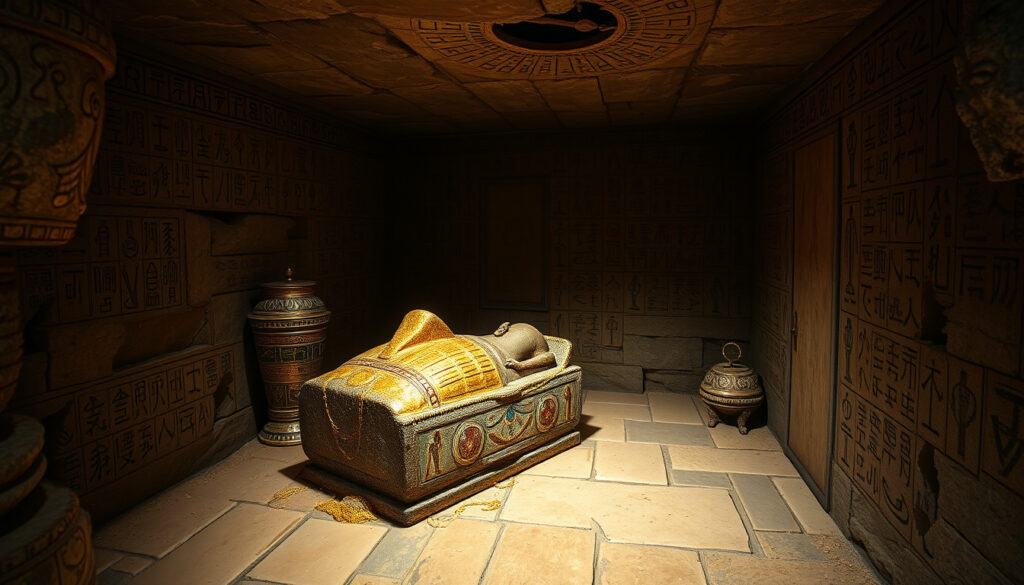
King Tut: Complete Biography, Death, Health, and Tomb Discovery
Few ancient figures spark as much curiosity as a teenage king who ruled more than 3,000 years ago and whose tomb was discovered almost by accident. King Tutankhamun—often called King Tut—went from a little-known pharaoh to a global icon after Howard Carter opened his burial chamber in 1922.
Reign started: c. 1332 BC ·
Age at ascension: 9 years old ·
Age at death: 18 or 19 ·
Tomb discovered: 1922 ·
Discovered by: Howard Carter
Quick snapshot
- Full name: Tutankhamun (born Tutankhaten) (Britannica)
- Dynasty: 18th Dynasty (Britannica)
- Reign: c. 1332–1323 BC (Britannica)
- Age at death: 18–19 (Britannica)
- Tomb discovered: 1922 by Howard Carter (Britannica)
- Had clubbed left foot (CT scan evidence) (University of Manchester)
- Suffered from malaria, bone necrosis, possible scoliosis (University of Manchester)
- Death likely combination of broken leg and malaria (University of Manchester)
- No consensus on exact cause (JSTOR Daily)
- Wife: Ankhesenamun (half-sister)
- Two stillborn daughters found in his tomb
- Parents likely Akhenaten and one of his sisters
- No surviving heir
- Tomb found almost intact (rare) (Egypt Exploration Society)
- Golden death mask is iconic (Egypt Exploration Society)
- Mummy curse myth created media frenzy (Egypt Exploration Society)
- Sparked modern Egyptomania (Egypt Exploration Society)
10 key details that sum up what we know about King Tut with solid evidence.
| Field | Value |
|---|---|
| Full name | Tutankhamun (originally Tutankhaten) |
| Reign | c. 1332–1323 BC |
| Age at ascension | 9 years old |
| Age at death | 18–19 years old |
| Tomb discovery | 1922, KV62, Valley of the Kings |
| Discoverer | Howard Carter |
| Spouse | Ankhesenamun |
| Children | Two stillborn daughters |
| Known health issues | Clubfoot, malaria, bone necrosis, scoliosis |
| Famous artifact | Gold death mask |
Who Was King Tut and What Happened to Him?
Tutankhamun was an ancient Egyptian pharaoh of the 18th Dynasty, ruling from about 1333 BCE to 1323 BCE, according to the Encyclopædia Britannica. He ascended the throne around age 9 and died at about age 19, making his reign little more than a decade long (PBS NewsHour).
Early life and ascension to the throne
- Born Tutankhaten, meaning “living image of Aten” – a reference to the sun god promoted by his father (Britannica).
- He was the son of Akhenaten, the “heretic king” who moved the capital to Amarna and elevated Aten above all other gods.
- After Akhenaten’s death, the young prince took the throne as Tutankhamun, signaling a return to traditional religion centered on Amun.
A boy who inherited a religious revolution and spent his short reign reversing it — yet his own name change from Tutankhaten to Tutankhamun shows just how quickly the pendulum swung back.
Restoration of traditional religion
- One of his first acts was to restore the worship of Amun and move the capital back to Thebes.
- Inscriptions and reliefs from his reign show the king making offerings to Amun, directly undoing his father’s reforms (Egypt Exploration Society).
Why Is King Tut So Famous?
The simple answer: his tomb was discovered nearly intact in 1922. Most royal tombs in the Valley of the Kings had been looted long before archaeologists reached them. Tutankhamun’s, designated KV62, contained over 5,000 artifacts (Britannica).
Discovery of nearly intact tomb (1922)
- British archaeologist Howard Carter, funded by Lord Carnarvon, found the entrance on November 4, 1922, in the Valley of the Kings.
- The antechamber was opened on November 26, revealing a stunning collection of furniture, chariots, and statues.
- The burial chamber itself was opened on February 16, 1923, exposing the famous gold death mask and nested coffins.
The golden death mask and treasures
- The mask, made of 11 kg of solid gold, is one of the most recognized artifacts in the world.
- Over 130 walking sticks and canes were found, reflecting Tutankhamun’s need for mobility support.
Global media frenzy and mummy curse myth
- When Lord Carnarvon died a few months after the tomb opening, newspapers created the “curse of the pharaohs” story.
- Media coverage turned Tutankhamun from a footnote into a household name (JSTOR).
The curse myth sells headlines but obscures real archaeology. For every story about a mysterious death, there are decades of careful scholarship that explain Tutankhamun’s life without superstition.
What Disabilities Did King Tut Have?
Modern medical imaging and DNA analysis have painted a detailed picture of Tutankhamun’s poor health. Far from the warrior pharaoh of Hollywood, he was a frail young man with multiple physical ailments.
Evidence from CT scans and DNA analysis
- A 2005 CT scan of the mummy revealed a clubbed left foot and bone necrosis (death of bone tissue) (University of Manchester).
- DNA tests conducted in 2010 found evidence of malaria parasites and several genetic abnormalities (University of Manchester).
- The same study identified a cleft palate and signs of scoliosis (curvature of the spine).
Malaria and genetic disorders
- The combination of malaria and a weakened immune system likely contributed to his early death.
- Genetic analysis suggests his parents were siblings, which may explain several congenital conditions (University of Manchester).
Physical deformities: clubfoot, cleft palate, bone necrosis
- The clubfoot would have made walking painful, explaining the 130+ canes in his tomb.
- Bone necrosis in his left foot could have been exacerbated by malaria, leading to a fatal infection.
Tutankhamun was not the robust ruler depicted in ancient art. His physical limitations likely meant he could not lead armies or hunt — activities that were expected of a pharaoh. Future researchers face the challenge of determining how much his rule was actually managed by advisors.
How Old Was King Tut When He Died and How Did He Die?
He died around age 18–19, in approximately 1323 BC (Britannica). The exact cause remains debated, but modern evidence has narrowed the possibilities.
Theories: chariot accident, murder, infection, malaria
- Earlier theories included murder (a blow to the head) — but the 2005 CT scan ruled out any skull fracture (University of Manchester).
- A 2010 study suggested a broken leg combined with a severe malaria infection (University of Manchester).
- Some researchers propose a chariot accident that caused the leg fracture and subsequent infection.
Recent forensic conclusions
- No single cause is universally accepted. The Egypt Exploration Society notes that the broken-leg-plus-malaria theory is plausible but not proven.
- The murder theory is now considered unlikely by most experts (JSTOR Daily).
What Are 5 Facts About King Tut?
- His original name was Tutankhaten. He changed it to Tutankhamun after restoring the worship of Amun (Britannica).
- He became pharaoh at 9 and died at 18–19, making his reign one of the shortest of the 18th Dynasty (PBS NewsHour).
- His tomb (KV62) was nearly intact when Howard Carter found it in 1922, containing over 5,000 artifacts (Egypt Exploration Society).
- He had a clubbed foot and used canes. Over 130 walking sticks were buried with him to support his mobility.
- DNA evidence reveals he had malaria and genetic disorders, including osteonecrosis and a cleft palate (University of Manchester).
The pattern is clear: his fame rests on the tomb’s survival, but his health story is the one that changes how we see him. A king who couldn’t walk properly, who fought off malaria in a pre-antibiotic world — and still managed to reverse his father’s unpopular reforms.
Timeline of Key Events
- c. 1341 BC – Tutankhamun born (estimated).
- c. 1332 BC – Becomes pharaoh at age 9, as Tutankhaten.
- c. 1332–1323 BC – Reign; restores Amun cult, moves capital to Thebes.
- c. 1323 BC – Dies at age 18–19.
- 1922 Nov 4 – Howard Carter discovers tomb entrance (Britannica).
- 1923 Feb 16 – Carter opens burial chamber.
- 1925–1932 – Excavation and cataloging of artifacts.
- 2005 – First CT scan of mummy (University of Manchester).
- 2010 – DNA study reveals malaria and genetic disorders (University of Manchester).
Future CT and DNA studies may refine the cause of death. Each new technology applied to the mummy has changed the narrative — expect more revisions.
What We Know vs. What Remains Unclear
Confirmed facts
- King Tut reigned c. 1332–1323 BC (Britannica).
- He ascended at age 9 and died at 18–19 (PBS).
- His tomb was discovered by Howard Carter in 1922 (Britannica).
- He had a clubbed left foot and used canes (Univ. of Manchester).
- His DNA shows evidence of malaria and genetic abnormalities (Univ. of Manchester).
- He married Ankhesenamun.
What’s unclear
- Exact cause of death remains debated (JSTOR Daily).
- Whether he was murdered or died from accident is unresolved.
- The identity of his mother is not certain (possibly Kiya or a sister of Akhenaten).
- Extent to which physical disabilities affected his rule is unknown.
Expert Perspectives on King Tut
“At first I could see nothing, the hot air escaping caused the candle to flicker, but as my eyes grew accustomed to the light, details of the room within emerged slowly from the mist: strange animals, statues, and gold – everywhere the glint of gold.”
— Howard Carter, describing his first glimpse of the tomb (recounted in his journal)
“The CT scan shows that Tutankhamun did not die from a blow to the head. The hole in his skull was made during mummification or by the archaeologist who examined him.”
— Dr. Zahi Hawass, former Egyptian antiquities minister, commenting on the 2005 CT scan findings (BBC)
“He was not a strong pharaoh. He was a boy with a weakened immune system, malaria, and a broken leg. That combination likely killed him.”
— Dr. Carsten Pusch, geneticist at the University of Tübingen, summarizing the 2010 DNA study (Nature)
“The popular image of Tutankhamun as a warrior pharaoh is almost certainly wrong. He was a sickly teenager who needed canes to walk.”
— NPR, “Frail And Sickly, King Tut Suffered Through Life” (NPR)
Each of these voices — the discoverer, the antiquities official, the geneticist, and the science journalist — converges on one theme: Tutankhamun was a physically compromised boy whose fame owes everything to the survival of his tomb.
Why King Tut Still Matters
The story of King Tut is not just about gold and curses. It’s a lesson in how technology can rewrite history — CT scans and DNA analysis have turned a one-dimensional “boy king” into a complex patient. For the modern reader, the implication is clear: ancient history is not static; every new method brings us closer to the human reality behind the monuments. For Egyptology, the challenge is to keep funding these studies so that the next generation of questions can be answered.
Related reading: Ancient Egypt: Facts, History, Symbols & FAQs · National Geographic Shutdown: What Happened and How to Watch
theconversation.com, historyhit.com, reddit.com, sites.arizona.edu, sciencedirect.com, kids.nationalgeographic.com, reddit.com
Frequently Asked Questions
Did King Tut have children?
Yes, two stillborn daughters were found mummified in his tomb. DNA tests confirm they are his children. Neither survived, so he left no living heir.
What was King Tut’s real name?
He was born Tutankhaten, meaning “living image of Aten.” After restoring the worship of Amun, he changed it to Tutankhamun (Britannica).
Why did King Tut change his name?
His father Akhenaten had promoted the sun god Aten. When Tutankhamun became pharaoh, he reversed this policy and restored the traditional god Amun, reflecting the shift in his name.
How old was King Tut when he became pharaoh?
He was about 9 years old at his ascension (PBS NewsHour).
Is King Tut’s gold mask solid gold?
Yes, the death mask is made of 11 kg of solid gold, inlaid with semi-precious stones. It is one of the most famous artifacts from ancient Egypt.
What was the curse of King Tut?
The “curse” was a media invention after Lord Carnarvon died a few weeks after the tomb opening. No scientific evidence supports any supernatural curse.
Where is King Tut’s mummy now?
It remains in his tomb (KV62) in the Valley of the Kings, Luxor, Egypt, displayed in a climate-controlled glass case.
Who ruled after King Tut?
His successor was Ay, a high official who had served his father Akhenaten. Ay’s reign was short, and the 18th Dynasty ended shortly after.
More related posts
 Lara Bingle: Her Rise, Relationships, and Life Today
 Walter White Breaking Bad: Complete Character Guide
 Edvin Ryding: Age, Height, Relationship, and Career Facts
 Kia Carnival 2026: Price, Specs & Future Outlook
 Daylight Savings End 2025: When Clocks Go Back in Ireland
 Aaron Burr: After the Duel, Treason Trial, and Death
 Hannah Kent: Books, Biography, True Stories & Personal Life
 Somebody That I Used to Know – Gotye Kimbra Hit Explained
