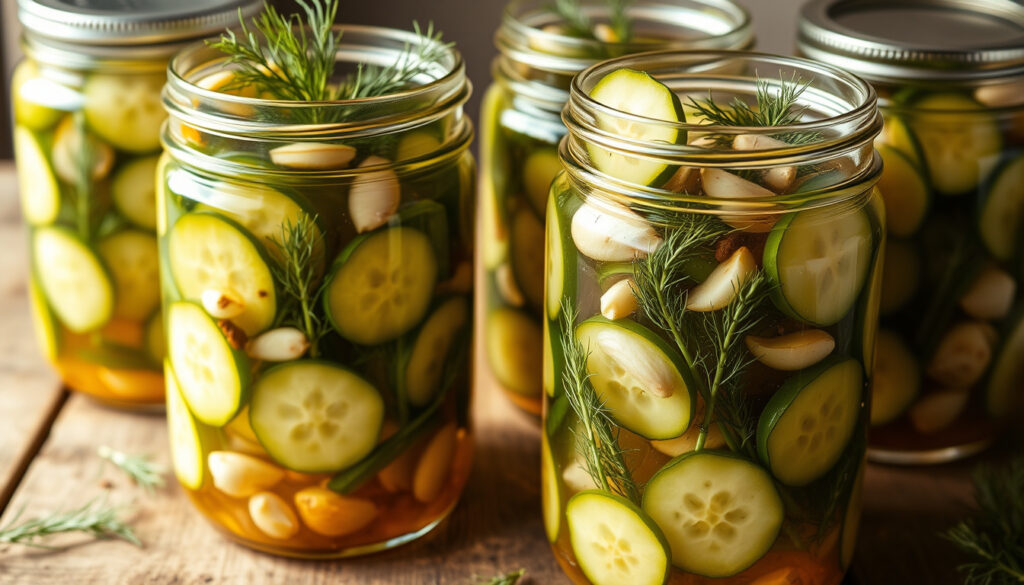
Pickled Cucumber Recipe: Easy Quick Homemade Pickles
If you’ve ever bought a jar of pickles and thought, “I could make these myself,” you’re right — and it takes less effort than you might expect. Quick pickled cucumbers use a simple brine formula you can memorize in seconds and adapt endlessly for different cuisines. Once you understand the core ratio, a whole pantry of flavors opens up.
Prep time: 15 minutes · Ready in: Next day · Vinegar options: White wine, apple cider, rice · Salt soak: 15 minutes · Common rule: 3-2-1 method
Quick snapshot
- Fridge pickles ready next day (The Mediterranean Dish)
- 3-2-1 ratio: 3 vinegar, 2 water, 1 sugar (The Spice House)
- Shelf life up to 2 months refrigerated (The Mediterranean Dish)
- Exact shelf life varies by brine ratio
- pH testing rarely done at home
- Precise botulism risk data for fridge pickles
- 3-2-1 adapted from Aquavit cookbook (2013)
- Regional variants evolved independently
- Fridge method popularized post-2010
- More vinegar-free fermentation options
- Asian-style quick pickles gaining popularity
- Custom spice blend subscription kits
| Label | Value |
|---|---|
| Salt soak | 15 minutes to draw moisture |
| Brine heat | Optional for quick pickles |
| Fridge life | Up to 2 months |
| Best cukes | Kirby or Persian, 3-5 inches |
| Ice bath crunch | 20 minutes improves texture |
| Brine simmer | 5-10 minutes |
How to make a pickled cucumber?
Making quick pickled cucumbers at home follows a straightforward process that divides into three phases: preparation, brine-making, and storage. The National Center for Home Food Preservation confirms that refrigerator pickles require no water bath processing, making this one of the safest entry points into home preserving.
Ingredients needed
- 1–1.5 lbs pickling cucumbers (Kirby or Persian, 3–5 inches)
- 1.25 cups white vinegar (or preferred vinegar)
- 1.25 cups water
- 2 teaspoons kosher salt
- 2 tablespoons additional kosher salt for soaking
- 2 cloves garlic, smashed
- 1 teaspoon peppercorns
- Fresh dill (optional)
Step-by-step instructions
- Slice cucumbers 1/8 to 1/4 inch thick. For extra crunch, place sliced cucumbers in an ice bath for 20 minutes, then pat thoroughly dry. According to The Mediterranean Dish, this step meaningfully improves the final texture.
- Toss cucumber slices with 2 tablespoons kosher salt and let sit for 15 minutes. This draws out excess moisture that would otherwise water down your brine.
- Rinse the salt off the cucumbers and pat dry. Pack tightly into a clean pint jar with garlic and peppercorns.
- Combine vinegar, water, and 2 teaspoons salt in a small saucepan. Heat over medium until salt dissolves — about 5 minutes per the Dinner in 321 method. For a cold-pack method, simply dissolve salt in room-temperature liquid and pour over cucumbers.
- Pour warm brine over cucumbers, leaving 1/2 inch headspace. Let cool to room temperature, then seal and refrigerate.
- Wait at least 24 hours before tasting. Optimal flavor develops over 48–72 hours.
Do I need to boil vinegar for pickling?
No, boiling vinegar is not required for quick refrigerator pickles. The heat merely dissolves sugar and salt faster — about 5 minutes over medium heat per the Dinner in 321 method. A cold-pack approach dissolves salt in room-temperature liquid and pours it directly over cucumbers, producing identical results with less effort. Either method works; neither involves cooking the cucumbers themselves.
How long do you have to soak a cucumber before it becomes a pickle?
Refrigerator pickles reach a pickle-like state in 24 hours, with optimal flavor developing over 48–72 hours. The minimum salt soak before brining runs just 15 minutes — long enough to draw out excess moisture that would dilute the brine. East Coast New Pickles represent the shortest path: Mike from Pickle Guys clarifies that “new pickles are pretty much the least pickled, more like a salty cucumber,” ready anywhere from 1–10 days before advancing to half-sour stage.
Storage tips
Quick pickled cucumbers keep in the refrigerator for 2 weeks to 2 months depending on vinegar concentration and acid levels. The Mediterranean Dish notes a 2-month shelf life for Mediterranean-style tangy brines. Always use clean utensils when removing pickles to avoid contamination.
Refrigerator pickles are not canned: no water bath required. For home cooks nervous about food safety, this method eliminates the most common preserving hazard while producing restaurant-quality results.
Which vinegar is best for pickling cucumbers?
Vinegar selection shapes both flavor profile and preservation power. The Spice House confirms that any vinegar at 5% acidity maintains the quick pickle formula without compromise. What changes is the character of the finished product.
Types of vinegars
White distilled vinegar provides the sharpest, most neutral tang and is what most traditional American pickle recipes use. It lets the cucumber flavor and added spices dominate without interference. Sainsbury’s Magazine notes that quickles specifically use higher vinegar ratios than regular pickles to accelerate flavor absorption.
White wine vs apple cider
White wine vinegar offers a more complex, slightly fruity acidity that works beautifully with Mediterranean-style pickles featuring dill and coriander. Apple cider vinegar brings a milder, almost sweet undertone that pairs well with mustard seeds and garlic. For Asian-style quick pickles, rice vinegar delivers the lightest touch with minimal sugar needed.
Flavor impacts
- White distilled: Sharp, clean, traditional dill pickle flavor
- White wine: Fruity complexity, French or Mediterranean profiles
- Apple cider: Mild sweetness, North American deli style
- Rice vinegar: Delicate, Japanese or Korean applications
- Red wine vinegar: Bold color transfer, robust Greek preparations
Vinegar acidity directly controls harmful bacteria. The 5% minimum acidity requirement from The Spice House exists because below this threshold, preservation reliability drops. Substituting a lower-acid vinegar without adjusting ratios invites spoilage.
What is the 3 2 1 rule for pickles?
The 3-2-1 rule simplifies quick pickling into a ratio you can scale to any batch size. The Spice House defines it precisely: three parts vinegar, two parts water, and one part sugar, with salt and aromatics added to taste.
Breaking down the ratio
This formula produces approximately 5 cups of brine, enough for 1–1.5 pounds of cucumbers. The higher vinegar concentration compared to traditional 1:1 pickle brines accelerates flavor penetration, which is why these are called “quickles” — no waiting weeks for fermentation or canning. Sainsbury’s Magazine confirms the 3:2:1 structure with the note that “quickles use higher vinegar ratio than regular pickles for faster flavor absorption.”
Application to cucumbers
For one pint jar of cucumber pickles: combine 1.5 cups vinegar, 1 cup water, and 0.5 cup sugar in a saucepan. Heat until sugar dissolves, add salt and spices, then pour over prepared cucumbers. The brine yields roughly 5 cups per the standard batch.
Variations
Regional adaptations exist beyond the standard 3-2-1. The Charleston Flash Pickles recipe uses a 9:6:3 water:vinegar:sugar ratio, emphasizing water over vinegar for a lighter touch. Saucy Little Dish documents an adaptation from chef Marcus Samuelsson’s Aquavit cookbook using 3 cups boiling water, 2 cups white vinegar, 1 cup sugar with turmeric and peppercorns.
What are common pickling mistakes to avoid?
Even experienced home cooks stumble on a few predictable pitfalls. Understanding these failure modes before you start saves both ingredients and frustration.
Soggy results
The most common complaint — mushy pickles — typically stems from skipping the salt-soak step or failing to pat cucumbers dry afterward. A Gardener’s Table recommends trimming the blossom end from pickling cucumbers, as this residual flower tissue contains enzymes that accelerate softening. The ice bath technique from The Mediterranean Dish addresses this directly by firming cell walls before brine contact.
Wrong salt
Table salt contains additives that can make brine cloudy and affect flavor unpredictably. Pickling salt or kosher salt dissolve cleanly and provide the correct salinity without anti-caking agents. Greg Nelson Cooks specifies kosher salt in all measurements for consistent results.
Overheating
Quick pickles don’t require boiling the cucumbers themselves. Heating the brine just enough to dissolve sugar and salt — 5 minutes over medium heat per Dinner in 321 — avoids cooking the cucumber texture into softness. Some methods skip heat entirely, dissolving salt in room-temperature liquid for a cold-pack approach.
Low-acid vegetables like cucumbers need adequate vinegar acidity (minimum 5%) to prevent bacterial growth. Substituting lower-acid vinegars or diluting too heavily compromises food safety. The National Center for Home Food Preservation confirms that refrigerator pickles are not canned, meaning they rely entirely on acid preservation — no exceptions.
What is the basic pickling formula?
Beyond the 3-2-1 ratio, the basic pickling formula encompasses the full toolkit of salt, sugar, acid, and aromatics that transform raw cucumbers into preserved pickle snacks.
Brine ratios
The foundation is vinegar, water, salt, and sugar in proportions your palate prefers. Standard start: equal parts vinegar and water with 1–2 tablespoons salt per cup of liquid. Sugar ranges from none for savory styles to 1/4 cup or more for sweet pickles. The Spice House confirms that 3-2-1 brine works for cucumbers, beets, carrots, and other vegetables with minor ratio adjustments.
Spices and add-ins
Garlic and dill represent the classic American pairing. The Mediterranean Dish adds coriander, mustard seeds, peppercorns, and bay leaves to their brine, simmering them for 10 minutes to extract maximum flavor. Greg Nelson Cooks documents several regional variations: French Herbes de Provence, Moroccan blends with coriander and turmeric (giving a yellow hue), and Traditional dill-mustard profiles.
Scaling up
For party quantities or batch preserving, multiply the 3-2-1 ratio while maintaining proportions. One gallon of vegetables typically needs 2–3 cups of vinegar concentrate. Pack jars tightly with cucumbers, garlic, onions, and herbs to ensure everything stays submerged below the brine line — floating vegetables risk spoilage.
Upsides
- Fridge storage — no water bath canning required
- Ready in 24 hours vs. fermented weeks
- Adaptable to any cuisine style
- No special equipment beyond clean jars
- Control over sodium and additives
Downsides
- Shelf life limited to 2 months refrigerated
- Texture softer than canned pickles
- Requires refrigerator storage always
- Limited to small-batch practicality
- Blossom-end trimming adds prep time
Regional style variations
Beyond the standard American dill style, quick pickled cucumbers adapt to flavors from around the world. Each regional approach modifies the base brine ratio and spice selection.
East Coast New Pickles
A Gardener’s Table documents the New York deli tradition: salt-water brined Kirby cucumbers with garlic and pickling spices, left at room temperature for 1 hour then refrigerated 1–7 days. Mike from Pickle Guys clarifies that “new pickles are pretty much the least pickled, more like a salty cucumber,” ready in 1–10 days before advancing to half-sour stage.
Mediterranean and Middle Eastern
The Mediterranean Dish uses a tangier brine of 3 cups vinegar to 2.25 cups water with 2.5 tablespoons kosher salt and spices. Common additions include jalapeño for heat, ginger for warmth, and turmeric for color. These versions lean vinegar-heavy for pronounced sourness.
Japanese and Korean
Pickled Plum’s Japanese quick pickle uses minimal brine: 1/4 cup water, 1/4 cup rice wine vinegar, and 2 teaspoons sugar for one English cucumber. The lower acid and sugar content produces a delicate, almost refreshing pickle rather than the punchy sour of American styles. Korean variations incorporate gochugaru or sesame oil for heat and nuttiness.
Jamie Oliver’s pickled cucumber method demonstrates how a chef approaches quick pickles: minimal ingredients, maximum flavor from technique rather than lengthy preparation.
Mike from Pickle Guys, a New York pickle expert, notes that new pickles represent the least pickled stage, ready anywhere from one to ten days before advancing to half-sour.
The implication: regional traditions reveal that pickling intensity runs on a spectrum — from one-day quickles to multi-week ferments — and personal preference dictates where you land.
Related reading: No Bake Cheesecake Recipe · Sponge Cake Recipe
agardenerstable.com, gregnelsoncooks.com, dinnerin321.com, youtube.com, sainsburysmagazine.co.uk, nchfp.uga.edu, saucylittledish.wordpress.com, notentirelyaverage.com, youtube.com
While perfecting your 3-2-1 dill brine, consider how the bread and butter pickles recipe elevates cucumbers with turmeric, mustard seeds, and Depression-era sweetness.
Frequently asked questions
These common questions address the practical concerns home cooks encounter when making quick pickled cucumbers.
Can I use regular cucumbers for pickling?
English cucumbers work well for quick pickling due to their crispness and fewer seeds. A Gardener’s Table notes that Kirby or Persian cucumbers in the 3–5 inch range are ideal for new pickles because their size and texture hold up better in brine. Standard slicing cucumbers tend to have higher water content and softer flesh, resulting in mushy quick pickles.
How to store homemade pickled cucumbers?
Refrigerate immediately after cooling. Use clean, dry glass jars with tight-fitting lids. The Mediterranean Dish confirms a 2-month refrigerated shelf life for properly made quick pickles. Always use a clean utensil when removing pickles to avoid introducing contaminants that shorten shelf life.
Are pickled cucumbers safe without canning?
Yes, refrigerator pickles are safe without canning because the vinegar acidity preserves them in cold storage. The National Center for Home Food Preservation confirms that refrigerator pickles require no water bath processing — the acid in vinegar alone prevents harmful bacterial growth when kept refrigerated.
What if my pickles are too salty?
Rinse soaked cucumbers before packing to remove excess surface salt. If the finished pickles taste too salty, the brine ratio was likely too concentrated. Future batches can reduce salt by 10–20% or dilute the brine slightly with additional water while maintaining vinegar minimum acidity.
Can I reuse pickle brine?
Reusing brine is possible if it hasn’t been contaminated by double-dipping and still meets minimum 5% acidity. However, flavor intensity decreases with each use, and safety margins narrow if previous batches introduced any contamination. For best results, use fresh brine for each batch.
How to make pickled cucumbers spicier?
Add sliced jalapeños, red pepper flakes, or whole serrano peppers directly to the jar before pouring brine. For deeper heat integration, simmer chili peppers in the brine itself. The Mediterranean Dish includes red pepper flakes as a standard variation for Middle Eastern-style pickles.
Difference between pickling and fermenting cucumbers?
Quick pickling uses vinegar acid to preserve cucumbers immediately — no living cultures involved. Fermentation relies on lactic acid bacteria converting sugars over days or weeks, producing a complex tangy flavor through biological activity. The National Center for Home Food Preservation distinguishes home-fermented refrigerator dill pickles as using lactic acid fermentation versus the instant acid preservation of quick pickles.
For home cooks ready to experiment, the path from curious buyer to confident maker is surprisingly short. Master the 3-2-1 ratio once, adjust vinegar type and spices for your palate, and you’ll never need to buy jarred pickles again.
More related posts
 ABC TV Tonight: Schedule, Listings & Live Stream Guide
 Rich Piana: The Truth About His Size, Money, and Legacy
 Melbourne Cup Horses 2025: Complete Field and Key Contenders
 Shannon Sharpe: Personal Life, Feud & Career Stats
 Kalyn Ponga: Biography, Bathroom Incident, ADHD & Salary
 Puff Pastry Recipes: Sweet, Savory & Easy Ideas
 120 Pounds in KG: 54.43 kg Conversion + Stones & BMI
 2025 World Series: Dodgers Repeat as Champions | Series Results
