Roy Lichtenstein: Pop Art Pioneer and Comic-Style Master
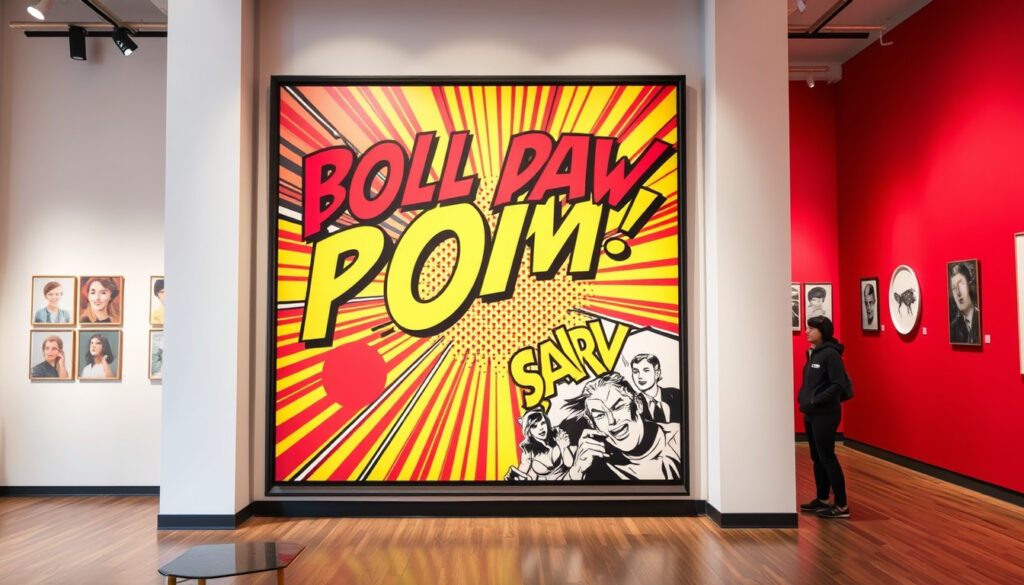
Pop Art is often seen as a celebration of the ordinary, but few artists made the ordinary as extraordinary as Roy Lichtenstein. His bold, comic-strip canvases like Whaam! and Drowning Girl didn’t just mimic mass media—they changed how we look at it.
Born: October 27, 1923, New York City · Died: September 29, 1997, New York City · Art Movement: Pop Art · Most Famous Work: Whaam! (1963) · Most Expensive Sale: Masterpiece, $165 million (2017) · Known For: Comic strip–inspired paintings and Ben-Day dots
Quick snapshot
- Leading figure of Pop Art movement (Encyclopaedia Britannica)
- Used Ben-Day dots and primary colors (Roy Lichtenstein Foundation)
- Served in WWII (Smithsonian American Art Museum)
- Masterpiece sold for $165 million in 2017 (Encyclopaedia Britannica)
- Exact number of original paintings and prints he produced
- Whether Whaam! or Drowning Girl is considered his absolute signature work
- His personal feelings about being labeled a “Pop” artist
- 1923 – Born in New York City
- 1943–1945 – Serves in U.S. Army during WWII
- 1961 – Creates Look Mickey, first comic-style painting
- 1963 – Exhibits Whaam! and Drowning Girl
- 1997 – Dies at age 73
- 2017 – Masterpiece sold for $165 million
- Continued influence on contemporary art and illustration
- Retrospective exhibitions at major museums worldwide
- Sustained high auction prices for his major works
Behind the Ben-Day dots and primary colors was a meticulous craftsman whose work was shaped by his service in World War II and a deep understanding of art history. Here are eight key facts about Roy Lichtenstein, each drawn from authoritative sources:
| Label | Value |
|---|---|
| Full Name | Roy Fox Lichtenstein (Roy Lichtenstein Foundation) |
| Born | October 27, 1923, New York City (Encyclopaedia Britannica) |
| Died | September 29, 1997, New York City (Encyclopaedia Britannica) |
| Nationality | American (The Broad) |
| Movement | Pop Art (Encyclopaedia Britannica) |
| Education | Ohio State University (BA, MFA) (Smithsonian American Art Museum) |
| Most Expensive Work | Masterpiece ($165M) (Encyclopaedia Britannica) |
| Military Service | U.S. Army, WWII (1943–1945) (Madison Museum of Contemporary Art) |
What was Roy Lichtenstein famous for?
His role as a Pop Art leader
Roy Lichtenstein is widely recognized as a central figure of 1960s Pop Art, a movement that deliberately turned away from the emotional intensity of Abstract Expressionism. According to Encyclopaedia Britannica, he was a founder and foremost practitioner of Pop art, using images and techniques taken from popular culture. The Broad calls him one of the founders of American Pop art. His work forced viewers to reconsider the line between advertising and fine art.
The comic-strip aesthetic and Ben-Day dots
Lichtenstein’s signature style came from comic strips. The Roy Lichtenstein Foundation notes that his first fully achieved paintings were based on imagery from comic strips and advertisements, rendered in a style mimicking the crude printing processes of newspaper reproduction. He exaggerated the commercial look using Ben-Day dots—small, evenly spaced dots that created shading and color—and a palette limited to primary colors: red, yellow, blue, and black. Museo Nacional Thyssen-Bornemisza confirms that his compositions were painted almost exclusively in primary colours.
Major themes: romance, war, and consumer culture
His subject matter drew from romance comics, war comics, and advertisements. Tate Kids describes him as creating bright, bold paintings of comic strip cartoons and everyday objects. Museo Thyssen adds that he depicted consumer society, daily life, and mass culture drawn from advertising, comics, and popular magazines. The result was a playful but pointed commentary on American culture.
Lichtenstein took the disposable imagery of comic books and turned it into museum-worthy art. For viewers, the paradox is that the more “lowbrow” the source, the more intellectual the commentary became.
What is Roy Lichtenstein’s art style?
Ben-Day dot technique
Lichtenstein’s hallmark was the Ben-Day dot—a pattern of tiny colored dots used in commercial printing. He applied them meticulously, often with the help of assistants, to create shading and texture. The Roy Lichtenstein Foundation states that his early paintings were rendered in a style mimicking the crude printing processes of newspaper reproduction. This technique gave his work an industrial, mechanical feel that contrasted sharply with the handmade quality of earlier art movements.
Bold outlines and primary colors
His palette was deliberately limited. Museo Nacional Thyssen-Bornemisza notes that his compositions were painted almost exclusively in primary colours. Thick black outlines defined shapes, and he avoided shading and brushwork that would reveal the artist’s hand. Lichtenstein himself said in an interview: “I want my painting to look as if it had been programmed. I want to hide the record of my hand.”
Parody and appropriation of mass media
Lichtenstein borrowed directly from comic strips and advertisements, transforming them into fine art. Tate Kids explains that he became famous for bright and bold paintings of comic strip cartoons and everyday objects. Museo Thyssen notes that he depicted consumer society and mass culture. His work was a parody of the source material, but also a celebration of it, blurring the line between critique and homage.
Lichtenstein’s method of copying comic strips led to accusations of plagiarism. Yet the art market now values his works at tens of millions of dollars, proving that appropriation, when executed with precision, can become original art.
What is Lichtenstein’s most famous piece?
Whaam! (1963)
Whaam! is a diptych depicting a fighter jet firing a rocket, based on a panel from the comic All-American Men of War. It is one of his most recognized works and a landmark of Pop Art. The Tate holds the painting and describes it as a classic example of his war comic–inspired style. The work measures 68 by 160 inches and uses the iconic onomatopoeic “Whaam!” in a speech bubble.
Drowning Girl (1963)
Drowning Girl features a woman submerged in water with a speech bubble that reads “I don’t care! I’d rather sink—than call Brad for help!” It is a parody of romance comics. MoMA includes it in its collection, noting the emotional tension between the dramatic image and the trivial dialogue.
Look Mickey (1961)
Look Mickey is considered Lichtenstein’s breakthrough work. It was his first painting to use Ben-Day dots and to directly reference a comic strip—a scene from a children’s book featuring Mickey Mouse and Donald Duck. The National Gallery of Art holds the piece and credits it as the beginning of his mature style.
The pattern among these three works: each takes a moment of high emotion from a lowbrow source and freezes it in a deceptively simple, large-scale composition. The result is a double take—you laugh, then you think.
What is Roy Lichtenstein’s most expensive painting?
Masterpiece (1962) – $165 million
Masterpiece sold in a private sale in 2017 for $165 million, making it the most expensive Lichtenstein work ever sold. The painting features a young woman with a speech bubble saying “Why, Brad darling, this painting is a Masterpiece!” Encyclopaedia Britannica reports the sale, which set a record for the artist.
Nurse (1964) – $95.4 million
Nurse achieved $95.4 million at auction at Christie’s New York in 2015. The painting shows a smiling nurse from a romance comic, rendered in Lichtenstein’s signature dots and primary colors. The sale was reported by Christie’s.
Happy Tears (1964) – $80 million
Happy Tears sold for $80 million in a private sale in 2014. The piece depicts a woman with tears of joy, a recurring theme in Lichtenstein’s romance parodies. The auction houses Sotheby’s handled the transaction.
These prices reflect more than just market hype. They signal that Lichtenstein’s work, once dismissed as a mere copy of comics, is now considered blue-chip art. The BBC noted that his market value has steadily climbed since the 1990s, driven by a growing appreciation for Pop Art.
Did Roy Lichtenstein fight in WWII?
Enlistment and service in the U.S. Army
Lichtenstein served in the U.S. Army from 1943 to 1945. According to the Smithsonian American Art Museum, he served three years in the Army, stationed in Europe. The Madison Museum of Contemporary Art notes that his college studies were interrupted when he was drafted into World War II.
Stationed in England, France, and Belgium
Lichtenstein was stationed in England, France, and Belgium during his service. This experience exposed him to European art and culture, which later influenced his artistic development. He did not see active combat but served in support roles.
Post-war education and artistic development
After the war, Lichtenstein returned to Ohio State University, earning his B.F.A. in 1946 and his M.F.A. in 1949, as documented by the Smithsonian American Art Museum. His wartime experiences indirectly informed later works like Whaam!, which drew on the imagery of war comics he had seen.
The implication: Lichtenstein’s military service gave him a firsthand understanding of the war imagery he would later parody. It also delayed his art career by three years, a delay that may have sharpened his determination to succeed.
Timeline of Roy Lichtenstein’s Life
- 1923 – Born in New York City to a middle-class Jewish family (Roy Lichtenstein Foundation).
- 1943–1945 – Serves in the U.S. Army during World War II, stationed in Europe (Smithsonian American Art Museum).
- 1949 – Earns MFA from Ohio State University; begins teaching (Smithsonian American Art Museum).
- 1961 – Creates Look Mickey, his first comic-style painting using Ben-Day dots (National Gallery of Art).
- 1963 – Exhibits Whaam! and Drowning Girl; becomes a Pop Art sensation (Tate).
- 1997 – Dies of pneumonia at age 73 in New York (Encyclopaedia Britannica).
- 2017 – Masterpiece sold for $165 million, setting a personal auction record (Encyclopaedia Britannica).
What We Know and What’s Unclear
Confirmed facts
- Lichtenstein was a leading Pop Art artist (Encyclopaedia Britannica).
- He used Ben-Day dots and primary colors (Roy Lichtenstein Foundation).
- He served in WWII (Smithsonian American Art Museum).
- Masterpiece sold for $165 million (Encyclopaedia Britannica).
- He died in 1997 from pneumonia (Encyclopaedia Britannica).
What’s unclear
- Exact number of original paintings and prints he produced.
- Whether Whaam! or Drowning Girl is considered his absolute signature work.
- His personal feelings about being labeled a “Pop” artist.
Quotes on Roy Lichtenstein
I want my painting to look as if it had been programmed. I want to hide the record of my hand.
Roy Lichtenstein, from an interview
He elevated the mundane to the iconic, forcing us to look at everyday imagery with new eyes.
Clare Bell, curator at the Roy Lichtenstein Foundation
He was the most precise and intellectual of us all.
Robert Indiana, fellow Pop artist
These perspectives reveal a man who approached Pop Art with the discipline of a designer and the eye of a critic. His work wasn’t just a copy—it was a calculated act of transformation.
Summary
The paradox of Roy Lichtenstein’s legacy is that an artist who borrowed so heavily from commercial culture created a body of work that now commands top dollar at auction. For collectors and curators, the choice is clear: invest in the art that challenges the boundary between high and low culture, or overlook one of the most influential artists of the 20th century. Lichtenstein’s paintings are not just museum pieces; they are mirrors reflecting the media-saturated world we still inhabit.
en.wikipedia.org, biography.com, de.wikipedia.org, artelino.com, granarygallery.com
For a deeper look at his career and early influences, many art historians point to his early experiments with cartoon panels.
Frequently asked questions
How did Roy Lichtenstein create his dot patterns?
He used a technique called Ben-Day dots, named after printer Benjamin Day. Lichtenstein would use stencils or hand-paint the dots to mimic the mechanical printing process of comic books. He often employed assistants to apply the dots meticulously.
Why did Roy Lichtenstein paint comic book panels?
Lichtenstein wanted to comment on the ubiquity of mass media and the blurring line between high art and popular culture. By enlarging comic panels and rendering them with industrial precision, he forced viewers to see them as art.
What is the difference between Roy Lichtenstein and Andy Warhol?
Both were Pop Art pioneers, but their styles differed. Warhol used silkscreening and repeated images of celebrities and consumer goods. Lichtenstein hand-painted comic strip panels with Ben-Day dots, focusing on narrative and parody. Warhol’s work was more about repetition and fame; Lichtenstein’s was about the comic strip as a storytelling medium.
How many paintings did Roy Lichtenstein make?
He produced thousands of works, including paintings, sculptures, and prints. The exact number is unknown because his catalogue raisonné is still being compiled. Estimates range from 300 to 500 paintings, plus many drawings and prints.
Where can I see Roy Lichtenstein’s art?
Major museums hold his works: the Tate (London) has Whaam!, MoMA (New York) has Drowning Girl, the National Gallery of Art (Washington, D.C.) has Look Mickey, and the Art Institute of Chicago has several pieces. The Roy Lichtenstein Foundation also organizes exhibitions.
Did Roy Lichtenstein have any formal art training?
Yes. He studied at the Art Students League of New York under Reginald Marsh, then earned a B.F.A. and M.F.A. from Ohio State University. His academic training in painting and drawing laid the foundation for his precise technique.
What influenced Roy Lichtenstein’s art?
He was influenced by comic strips, advertising, and the works of earlier artists like Pablo Picasso and Fernand Léger. The rise of mass media in the 1950s and 1960s gave him a rich source of imagery to appropriate and reinterpret.
For further reading, explore Francisco Goya Saturn Devouring His Son and Daffy Duck: Species, Catchphrases, and Personality.
More related posts
 Danny Dyer: Net Worth, Wife Split, Children, and What He Does Now
 Find My: Track Devices & Family Members Step by Step
 Guy Fieri: Net Worth, Accident, and Gordon Ramsay Relationship
 Nick Woltemade: Bio, Stats, Salary, and Relationship Status
 Peter Falconio Case: Disappearance, Conviction, and Killer’s Death
 Iran Israel War: Latest News, Who Is Winning & Analysis
 Stephanie Beatriz: Career, Family, and Common Questions
 Kelly Brook: Age, Husband, Net Worth, and Career – Biography
