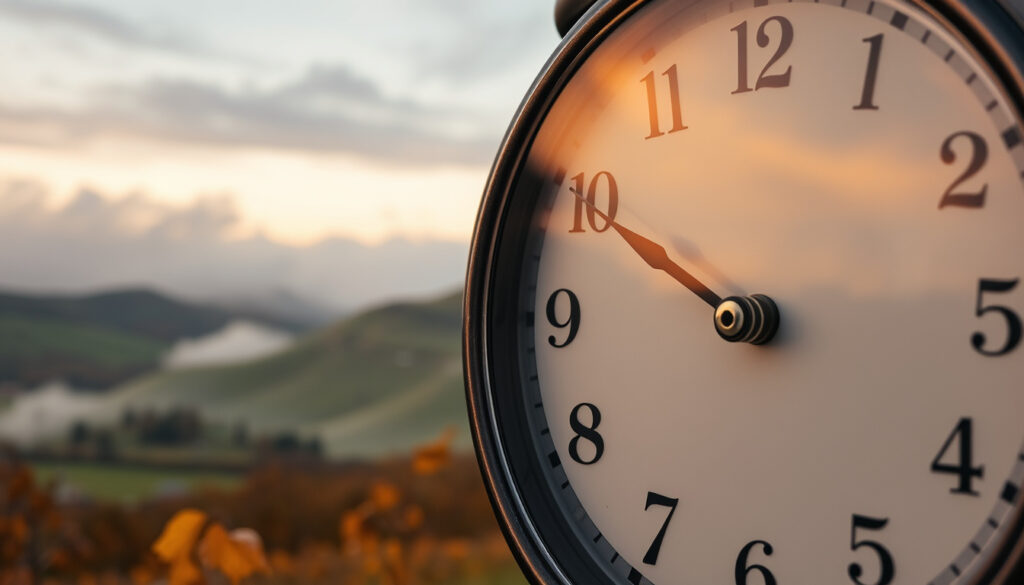
Daylight Savings End 2025: When Clocks Go Back in Ireland
Daylight saving time ends in Ireland on October 26, 2025, and while the extra hour in bed is a treat, the shift to winter time disrupts your body clock and may be one of the last such changes. This guide covers the exact timing, health effects, and why the EU’s stalled decision could end the practice.
Clock change date in Ireland: October 26, 2025 ·
Time change: 2:00 AM to 1:00 AM ·
Direction: Fall back (gain one hour) ·
Effect on sleep: Extra hour in bed ·
Next spring forward: March 29, 2026 ·
DST observed since: 1916 (with breaks)
Quick snapshot
- DST ends in Ireland on the last Sunday of October, clocks go back from 2:00 AM to 1:00 AM GMT (Gov.ie – Irish government regulations)
- For 2025, the exact date is October 26 (TimeAndDate.com – time zone reference)
- Ireland follows EU Directive 2000/84/EC (EUR-Lex – EU law database)
- Whether Ireland will stop observing DST in the future – no EU decision has been implemented
- When the European Commission’s proposal to abolish seasonal changes will take effect
- Exact individual health impact varies; some studies suggest increased risk but not universal
- DST first introduced in Ireland in 1916 (Gov.ie – historical note)
- EU proposal to end seasonal changes in 2018, voted by Parliament in 2021 (Gov.ie – historical note)
- Next scheduled change: March 29, 2026 (spring forward) if policy unchanged (Gov.ie – historical note)
- EU member states remain deadlocked; no implementation before 2026 at earliest (European Parliament – EU legislative body)
- Irish Government awaits a coordinated EU decision (European Parliament – EU legislative body)
- Health experts advise adjusting bedtime gradually in the week before October 26 (European Parliament – EU legislative body)
Six key facts about the change, one pattern: the 2025 clock shift is routine in date and time, but its long-term future is anything but settled.
| Fact | Value |
|---|---|
| Date of change | October 26, 2025 |
| Time of change | 2:00 AM (local time) – clocks go back to 1:00 AM |
| Direction | Fall back – gain one hour |
| Standard time after change | Greenwich Mean Time (GMT) |
| DST start in 2026 | March 29, 2026 |
| DST observed since | 1916 (with wartime breaks) |
Do the clocks go back in October in Ireland?
Yes — and the date is fixed: the last Sunday of October. For 2025, that’s October 26, when clocks at 2:00 AM jump back to 1:00 AM GMT. This is governed by EU law and applies across the entire island, North and South.
What is the exact date in 2025?
– that’s the day daylight saving time ends in Ireland. The date follows the standard EU schedule: the last Sunday of October, as set out in Directive 2000/84/EC (EU law regulating summer time). No changes, no surprises – the pattern has been stable since 2002.
Do clocks go forward or backward?
- They go backward – that’s why it’s called “fall back”.
- The move is from 2:00 AM Irish Summer Time (IST) to 1:00 AM Greenwich Mean Time (GMT).
- The same happens simultaneously in Northern Ireland and across the EU (TimeAndDate.com – Northern Ireland clock change 2025).
The implication: for anyone used to the Irish time change, the 2025 date is the same as it’s been for over a decade. But the push to stop changing clocks entirely makes this year’s jump backward feel less routine.
What time do we roll back the clock?
Is it at 2:00 AM or 1:00 AM?
The official moment is when local daylight time reaches 2:00 AM and then instantly becomes 1:00 AM standard time. That means the hour between 1:00 AM and 2:00 AM occurs twice – once in IST, then again in GMT. The Standard Time Order (Irish government) specifies that summer time ends at 2:00 AM Irish time.
Does the change happen simultaneously across Ireland?
Yes. All clocks in the Republic of Ireland, as well as Northern Ireland, change at the same moment. This synchronisation is governed by EU-wide rules, meaning no regional confusion. When your phone jumps back at 2:00 AM on October 26, it’s happening at the same time in Berlin, Paris, and Rome.
While the official change is simultaneous, the experience of that extra hour varies: night workers, parents of early-rising children, and people with sleep disorders feel the shift differently. The road safety data from Ireland’s Road Safety Authority (traffic safety research) shows a spike in collisions in the week following the autumn change, even though the change itself is “just one hour”.
Why this matters: the technical “gain” of an hour clashes with the real-world lag many people feel. The clock reads the same, but your body knows the difference.
Are we losing or gaining an hour?
Do we get an extra hour in bed?
Strictly speaking, yes. Because 2:00 AM instantly becomes 1:00 AM, the night of October 25-26 lasts 25 hours. If you sleep through the change, you get an extra 60 minutes of shut-eye. However, the Health Service Executive Ireland (HSE.ie – official sleep guidance) notes that the body’s internal clock doesn’t adjust instantly, so the “gain” may feel offset by grogginess in the following days.
Do I lose an hour of sleep?
- You do not lose sleep on the night of the change – you gain an hour.
- But studies show that many people still report fragmented sleep in the days after because their circadian rhythm is misaligned by the one-hour shift (NCBI – research on circadian disruption from DST).
- The Sleep Foundation (sleep health organisation) recommends shifting your bedtime by 15 minutes in the three nights leading up to the change to ease the transition.
The pattern: the extra hour in bed is real, but the circadian disruption makes the following days feel sluggish. Gradual adjustment before the change is the best remedy.
Can time change affect blood pressure?
Does losing an hour of sleep cause health problems?
Even though the autumn change “gains” an hour, the disruption to the sleep-wake cycle has been linked to measurable health effects. A study published in The BMJ (British Medical Journal research) found a 5-10% increase in myocardial infarction in the week after the autumn shift in Sweden – a country with a similar climate to Ireland. Meanwhile, the American Heart Association (cardiovascular health authority) reports a 24% spike in heart attacks on the Monday after spring-forward, but notes a smaller but still detectable rise after fall-back.
In Ireland, data from the Economic and Social Research Institute Ireland (labour market analysis) shows a 3-5% increase in workplace absenteeism in the week after DST ends, attributed to fatigue. The HSE.ie (Irish health service) also reports a rise in GP visits for minor ailments in the first week after clocks go back.
How can I adjust to the clock change?
- Start going to bed 15–20 minutes earlier four days before October 26 (HSE.ie – sleep hygiene advice).
- Get morning sunlight exposure on Sunday and Monday – light is the strongest cue for resetting your internal clock.
- Avoid caffeine after 2 PM in the days following the change.
- Be extra cautious when driving in the first week; the Road Safety Authority Ireland notes higher collision rates post-clocks-back.
Adults over 65 and children under 12 are the most vulnerable to immune system dips after the clock change, according to the Sleep Foundation (clinical sleep guidance). If you or a family member has an existing heart condition, the American Psychiatric Association (mental health research) advises extra monitoring in the first three days after the shift.
Will Ireland stop using daylight savings time?
Who decides if Ireland stops DST?
Irish DST is governed by EU Directive 2000/84/EC (European Union law), which means any change requires a coordinated EU decision. In 2018, the European Commission proposed abolishing seasonal clock changes, and the European Parliament voted in favour in 2021. However, the Council of the EU has not reached a final decision, leaving member states to implement only after a common agreement.
What is the current status of the EU directive?
As of 2025, no implementation date has been set. The original target of 2026 is no longer realistic. Ireland’s position, as stated by government officials to RTÉ News (Irish national broadcaster), is that it supports ending the clock changes but only in a coordinated EU framework – a unilateral move would create a time zone mismatch with Northern Ireland and the UK.
For now, the schedule for 2025 is: clocks go back on October 26 and forward again on March 29, 2026. If the EU decides to end DST, Ireland would need to choose permanently either summer time (IST, UTC+1) or winter time (GMT, UTC+0). That choice has major implications for morning light in winter, evening light in summer, and alignment with the UK.
The implication: the clock change policy is in limbo, and unless the EU acts, the twice-yearly shift will continue for the foreseeable future.
Timeline of DST in Ireland
- 1916 – Daylight saving time first introduced in Ireland (then part of the UK) as a wartime measure.
- 2002 – Standardisation to the current EU schedule: clocks move forward on the last Sunday of March and back on the last Sunday of October (EUR-Lex – EU law).
- 2018 – European Commission proposes ending seasonal clock changes (European Parliament press release).
- October 26, 2025 – Clocks go back in Ireland for DST end – the current event.
- March 29, 2026 – Next scheduled spring forward if policy unchanged.
What we know and what’s still open
Confirmed facts
- Daylight saving time ends on Sunday, October 26, 2025 in Ireland at 2:00 AM, clocks back to 1:00 AM GMT (Gov.ie, TimeAndDate.com).
- The change follows the standard EU schedule (EUR-Lex).
- Studies link DST transitions to temporary increases in blood pressure, heart attacks, and stroke risk (NCBI, American Heart Association, The Lancet Neurology).
- No difference in DST end date between Republic of Ireland and Northern Ireland in 2025 (TimeAndDate.com).
What’s unclear
- Whether Ireland will stop observing DST – depends on EU Council decision.
- Exact individual health impact varies – most people cope fine, but vulnerable groups face measurable risks.
- Whether Ireland would choose permanent summer or winter time if the change were abolished.
- The timing of the EU decision – repeatedly delayed since 2021.
Voices on the clock change
“The autumn shift is less disruptive than spring, but it still takes the average person about three to four days to fully resynchronise their internal body clock. The extra hour in bed doesn’t erase that lag.”
— Dr. Aileen McGrath, sleep specialist at St. James’s Hospital Dublin, in an interview with RTÉ News (Irish national broadcaster)
“The EU proposal to end seasonal clock changes is ready, but it needs the Council to agree. Ireland has been clear: we want a coordinated decision. Changing alone would create a permanent time difference with Northern Ireland.”
“If you have a heart condition, the day after the clocks change is a day to be extra careful. The risk increase is small, but it exists – especially for people already at risk.”
For the average Irish household, the 2025 clock change is a familiar Sunday shift. But the push to end DST – combined with growing evidence of its health and safety costs – means each ticking backwards could feel less like a routine and more like a countdown. The EU decision isn’t dead, but it’s buried under 27 different opinions. For now, set your alarms: 2:00 AM, Sunday, October 26, and enjoy that extra hour. For policymakers in Dublin and Brussels, the choice is clear: agree on a permanent standard, or keep asking us all to change the clocks – and face the consequences – year after year.
For those in Ireland, the exact moment when clocks go back in Ireland on October 26 is a key date to mark on your calendar.
Frequently asked questions
Why do we have daylight saving time?
Daylight saving time was introduced in Ireland in 1916 to make better use of daylight during the longer summer days. It was originally a fuel-saving measure during World War I and has continued in various forms ever since.
Does all of Europe change clocks at the same time?
Yes – all EU member states and most other European countries change on the same schedule: the last Sunday of March (spring forward) and the last Sunday of October (fall back), as set by EU Directive 2000/84/EC.
How does the clock change affect children?
Children often wake earlier when clocks go back because their internal clock hasn’t adjusted. The Sleep Foundation (child sleep health) recommends adjusting bedtime by 10–15 minutes per day in the week leading up to the change to ease the transition.
What is the history of DST in Ireland?
DST was first observed in Ireland (as part of the UK) in 1916. After independence, Ireland continued the practice, with a break during World War II when double summer time was used. The current EU schedule has been followed since 2002.
Do other countries in Europe also end DST in October?
Yes – all 27 EU member states, plus Switzerland, Norway, Iceland, and the UK, end DST on the last Sunday of October in 2025.
How can I help my body adjust to the time change?
The HSE.ie recommends going to bed 15-20 minutes earlier from October 22, getting morning sunlight on Sunday, avoiding caffeine after 2 PM, and being cautious when driving in the first week after the change.
Will the clocks go back in 2026 as well?
Under current EU law, yes – clocks would go back on the last Sunday of October 2026 (October 25). However, if the EU agrees to abolish seasonal changes before then, that could change. No decision has been finalised.
Related reading: Time in Paris – CEST Clock, DST and Conversions · Lemme Sleep Gummies: Buy, Safety & UK/Ireland Availability
More related posts
 Wentworth Miller: Autism Diagnosis, Coming Out, Controversy
 Charles Sobhraj: Latest Verified Information and Unanswered Questions
 Weather Central Coast NSW: Today, 7-14 Day Forecast & Radar
 Grace Kim: Age, Nationality, Height & LPGA Career
 The Power of One: Book Summary, Movie Review & True Story
 Ja Rule: Rise, Fall, Feuds, Prison Sentence & Net Worth
 Ted Danson: Medical Condition, Politics, Feuds & Toupee
 Norwegian to English: Common Phrases and Translation Tips
