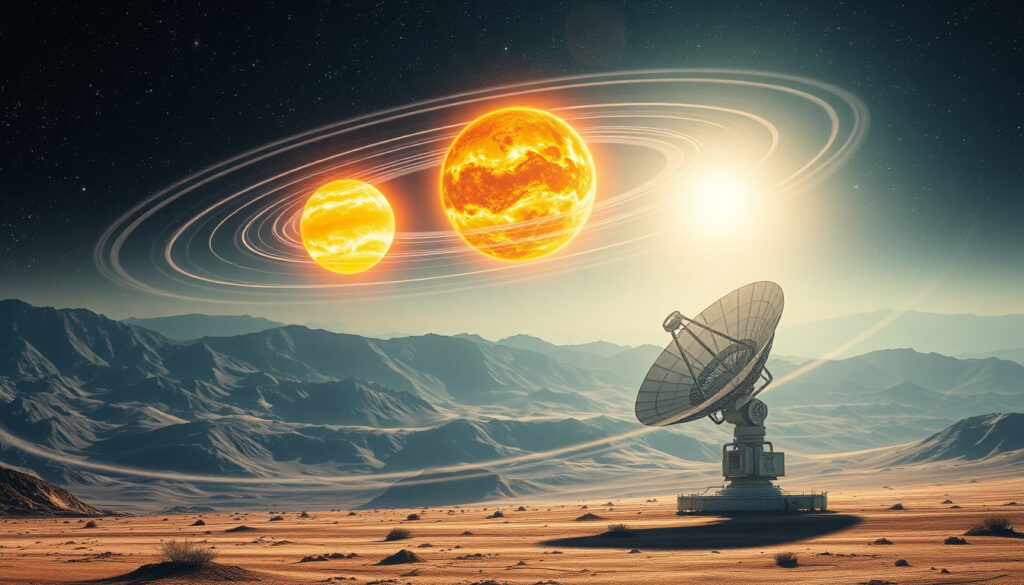
The Three-Body Problem on Netflix: Season 2 & Physics Guide
Few science fiction adaptations spark as much curiosity as Netflix’s 3 Body Problem — a series that turns a notoriously difficult physics puzzle into the backbone of an intergalactic thriller. Since its eight-episode Season 1 premiered on March 21, 2024 (Rotten Tomatoes, review aggregator), the show has divided audiences and critics while leaving one big question hanging: when will Season 2 arrive?
Novel author: Cixin Liu ·
Netflix premiere date: March 21, 2024 ·
Season 1 episode count: 8 ·
Seasons confirmed: 2 ·
Original language: English (adaptation)
Quick snapshot
- Netflix sci-fi series based on Cixin Liu’s novel (TV Guide, entertainment news)
- Premiered March 21, 2024 (Rotten Tomatoes)
- 8 episodes in Season 1 (Rotten Tomatoes)
- Confirmed by Netflix in May 2024 (TV Guide)
- Reportedly fewer episodes than Season 1 (TV Guide, production cost concerns)
- No exact release date yet (TV Guide)
- Rotten Tomatoes critics score: about 77% (Rotten Tomatoes)
- Audience score lower, citing pacing issues (Rotten Tomatoes)
- Praised for visual ambition and scope (Rotten Tomatoes)
- Three-body problem is a real celestial mechanics challenge (TV Guide, series premise explanation)
- Series uses it as plot device (TV Guide, series premise explanation)
- Features references to Schrödinger’s cat (TV Guide, series premise explanation)
Eight key facts about the series — one pattern: the show is a faithful adaptation of a celebrated novel with a strong creative pedigree.
| Attribute | Value |
|---|---|
| Title | 3 Body Problem |
| Based on | The Three-Body Problem by Cixin Liu |
| Genre | Science fiction, drama |
| Network | Netflix |
| Premiere | March 21, 2024 |
| Seasons | 2 (1 released, 2 confirmed) |
| Episode count (S1) | 8 |
| Showrunners | David Benioff, D.B. Weiss, Alexander Woo |
Is There a Season 2 of 3 Body Problem on Netflix?
Yes — Netflix officially renewed 3 Body Problem for a second season in May 2024 (TV Guide, entertainment news). The announcement notably referred to “all‑new episodes” rather than “Season 2,” which TV Guide notes as a subtle shift in branding. The showrunners — David Benioff, D.B. Weiss, and Alexander Woo — were already mapping out the story after the renewal (TV Guide).
When is season 2 releasing?
Netflix has not announced a specific release window. Given that Season 1 premiered nearly three years after the project was first announced in 2020 (TV Guide, timeline), industry observers expect at least a two-year gap — similar to the pace of other high‑budget sci‑fi series.
How many episodes in season 2?
The episode count is expected to be lower than Season 1’s 8. TV Guide reports that Netflix was cautious about production costs when announcing the renewal (TV Guide, production context). A reduced order would mirror the pattern of other Netflix genre series that trimmed episode counts after first seasons. No official number has been confirmed.
The implication: viewers should prepare for a multi-year wait before new episodes arrive, consistent with the production realities of large-scale science fiction television.
What Is the 3 Body Problem Theory?
The series takes its name from a real puzzle in celestial mechanics. The three‑body problem describes the motion of three celestial bodies — like a planet, a moon, and a star — interacting only through gravity (TV Guide, premise explanation). Unlike the two‑body problem (Earth and Moon), no general closed‑form solution exists, and the motion is often chaotic, meaning tiny changes in initial conditions lead to wildly different outcomes.
Why is the three-body problem so difficult?
Because the gravitational pull of each body on the other two creates a system with no repeatable pattern. Isaac Newton recognized the impossibility of a simple formula for three bodies, and mathematicians still rely on numerical approximations. The show uses this chaos as a metaphor for an alien civilization’s unstable home world.
What is Schrödinger’s cat paradox?
Schrödinger’s cat is a quantum‑mechanics thought experiment often referenced in pop culture. In the series, it appears as a philosophical nod: a cat in a sealed box is simultaneously alive and dead until observed. The paradox illustrates the weirdness of quantum superposition — and 3 Body Problem uses it to challenge the characters’ understanding of reality.
The three‑body problem is real physics, but the series takes dramatic liberties by linking it to an alien signal. Viewers who expect a textbook lecture should know the show prioritises narrative over mathematical accuracy.
What Is the 3 Body Problem About?
The story begins during China’s Cultural Revolution, where a fateful decision by a young astrophysicist reverberates across decades. In the present day, a group of scientists (called the “Oxford Five”) teams up with a detective to confront an extraterrestrial threat — a hostile alien civilization known as the San‑Ti (TV Guide, plot synopsis). The narrative moves between the 1960s and the present, weaving historical trauma with hard sci‑fi.
What is the plot of the series?
The core conflict involves the San‑Ti fleet heading toward Earth, taking centuries to arrive. Season 1 culminates in the “Staircase Project,” a failed mission to intercept the fleet and learn about San‑Ti technology. The failure results in the consciousness of one character, Will, being lost in space (TV Guide, episode details). Season 2 is expected to pick up the aftermath and introduce the second novel’s “dark forest” theory.
Who is in the cast?
Key cast members include Jovan Adepo, Liam Cunningham, Eiza González, Jess Hong, John Bradley, and Benedict Wong (Rotten Tomatoes, cast listing). The ensemble plays both the contemporary scientists and characters from the 1960s timeline.
Is Netflix 3 Body Problem Worth Watching?
Critical reception is generally positive. Rotten Tomatoes gives the series a critics score of around 77% (Rotten Tomatoes, aggregate rating), with reviewers praising its visual ambition and faithful adaptation of Liu’s ideas. Audience scores are lower, with some viewers citing pacing problems and the density of scientific concepts as barriers.
What do critics say?
Many critics highlight the show’s scale and the showrunners’ experience (Benioff and Weiss previously ran Game of Thrones). TV Guide reports that Benioff compared a Season 2 scene to the Red Wedding from that earlier series (TV Guide, behind‑the‑scenes interview). The series also received six Primetime Emmy Award nominations, according to a YouTube recap (YouTube, fan channel), though this report is unverified.
What is the Rotten Tomatoes score?
As of mid‑2024, the critics score sits near 77% (Rotten Tomatoes, score tracker). The audience score is lower, around 68%, reflecting divided opinions among general viewers.
Viewers who love cerebral, high‑concept sci‑fi will find plenty to admire. Those who prefer character‑driven stories with clear emotional arcs may struggle with the show’s focus on theoretical physics and large‑scale plotting.
Is There a Real Example of the Three-Body Problem?
Yes — real three‑body systems exist in the universe. The most famous is the Sun‑Earth‑Moon system, though it is only approximately a three‑body problem because the Moon’s influence on the Sun is negligible. A more genuine example is the Alpha Centauri star system, which consists of three stars gravitationally bound together (TV Guide, celestial mechanics background).
Are there real three-body systems in space?
Many. Astronomers have catalogued triple star systems across the galaxy, and even some planetary systems with three large bodies can exhibit chaotic behaviour over long timescales. The term “three‑body problem” in celestial mechanics refers to the difficulty of predicting these systems’ future positions.
How does chaos theory apply?
Because the equations lack a closed‑form solution, tiny uncertainties in current measurements grow exponentially — a hallmark of chaotic systems. This means long‑term predictions for three‑body systems are effectively impossible, a fact the series weaves into its plot as an alien species struggles with the same instability on their home world.
A fateful decision made in 1960s China reverberates in the present, where a group of scientists partner with a detective to confront an existential planetary threat.
— IMDb official synopsis (IMDb, series database)
Benioff compared a Season 2 scene to the Red Wedding from Game of Thrones.
— TV Guide, entertainment news
The pattern is clear: 3 Body Problem has already generated strong reactions, and the next season promises even higher stakes. For Netflix, the adaptation is a bet that audiences will embrace hard sci‑fi over a multi‑season arc. For fans of the novels, the payoff hinges on whether the show can condense Liu’s complex trilogy without losing its philosophical core.
Related reading: Cast of Interstellar · Secrets of the Silent Witch
For those intrigued by the scientific foundation of the story, the 3 Body Problem season 2 physics guide provides a comprehensive overview.
Frequently asked questions
What is the 3 Body Problem rating?
The series is rated TV‑MA for mature audiences due to violence, language, and disturbing content (Rotten Tomatoes, rating info).
Where can I watch 3 Body Problem?
The series streams exclusively on Netflix.
Is 3 Body Problem based on a true story?
No. The story is entirely fictional, though it draws on real physics and historical events like China’s Cultural Revolution (TV Guide, series background).
How long is each episode of 3 Body Problem?
Episode lengths range from 45 to 63 minutes, typical for a Netflix drama.
Who created the Netflix series?
The series was created by David Benioff, D.B. Weiss, and Alexander Woo (Rotten Tomatoes, showrunners).
Will there be a third season of 3 Body Problem?
Netflix has not yet confirmed a third season. The showrunners have said they plan to adapt the entire novel trilogy, and a third season would logically be needed to cover the final book (TV Guide, adaptation plans).
Do I need to read the book before watching the series?
No. The series is designed for newcomers, but readers of the novel will appreciate the expanded context and fidelity to key scenes.
More related posts
 Kim Seon-Ho: Biography, Controversy, and Comeback (2026)
 Hillarys Beach Club Guide: Prices, Menu, Dress Code & Owner Info
 Melissa Joan Hart: Career, Weight Loss, Net Worth
 Journey Planner PTV – Victoria Public Transport Guide
 2024 Kia Carnival – Price, Specs and Safety Guide
 Free IQ Test: Find Accurate Online Tests That Work
 Chemist Warehouse Mayfield: Hours, Phone, Products Guide
 When to Take Creatine: Optimal Timing & Dosage Guide
